







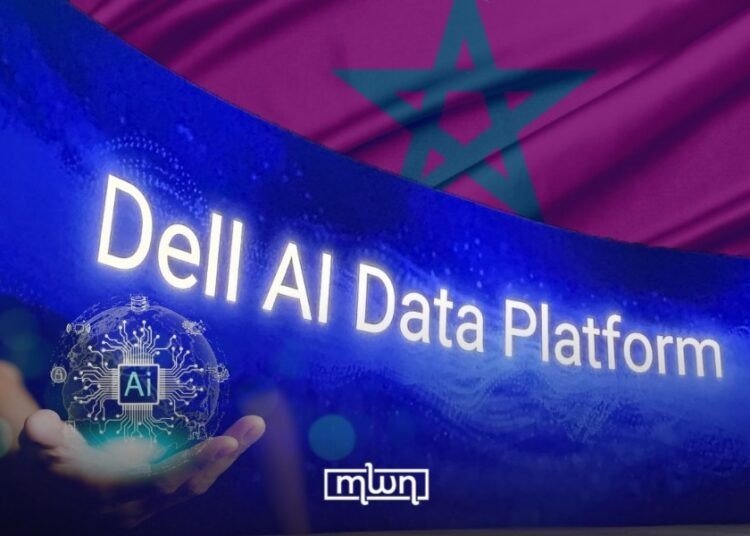
Morocco has unveiled an accelerated national artificial intelligence strategy, combining new regulations, institutional reforms, and major investments in digital infrastructure, as outlined during Dell Technologies’ “Innovate with Data” event in Casablanca. Minister of Digital Transition and Administrative Reform Amal El Fallah Seghrouchni said the push aligns with King Mohammed VI’s vision of digital sovereignty as a strategic pillar spanning economic growth, technology leadership, and national security.
The strategy sits within the broader Morocco Digital 2030 roadmap, which prioritizes modern governance, next-generation digital infrastructure, and the development of highly skilled talent. The minister confirmed that her department is finalizing a national AI roadmap that will define a unified data reference framework, identify priority AI use cases, and introduce ethical risk-assessment mechanisms aligned with UNESCO guidelines and the European Union’s AI Act.
On governance, Morocco has completed a comprehensive regulatory framework to ensure the safe, ethical, and responsible use of AI and digital technologies. The framework was developed in coordination with key national institutions, including the National Police (DGSN), the General Directorate of Information Systems Security (DGSSI), the data protection authority (CNDP), and the Digital Development Agency (ADD). A dedicated General Directorate for Artificial Intelligence will also be established to coordinate AI projects, oversee public-private partnerships, and ensure strategic coherence at the national level.
Digital infrastructure is another cornerstone of the strategy. Cloud computing is being positioned as a strategic asset, with a national sovereign cloud reference architecture planned for rollout in 2026 to guarantee interoperability, cybersecurity, and high performance. According to the minister, these measures are essential to strengthening Morocco’s technological sovereignty and building trust in digital public and private services.
Alongside infrastructure, Morocco is rolling out a national network of JAZARI Institutes, centers of excellence dedicated to AI research, training, and applied innovation. The flagship JAZARI Root center will open in Rabat on January 12, 2026, with additional thematic institutes planned across different regions. One such example is the JAZARI Institute in Dakhla, which will focus on AI applications in the energy transition, intelligent energy management, advanced training, and applied research.
The government is also assessing the digital maturity of Moroccan small and medium-sized enterprises through a national study supported by German Cooperation. Initial results are expected to be presented at Gitex Africa 2026 and will inform future public policy to better support SME digital transformation.
Morocco’s growing innovation ecosystem was another highlight. Officials noted that 200 Moroccan startups participated in Gitex 2025, with expectations to increase that number to 300 at Gitex 2026 in Marrakech. Business leaders see this as evidence of Morocco’s emergence as a regional technology hub capable of capturing a larger share of advanced global tech markets. CGEM President Chakib Alj emphasized the country’s ambition to be an active player in AI and digital transformation, supported by administrative reform, startup development, and the training of 100,000 digital professionals annually. He also pointed to Morocco’s competitive advantage in clean and affordable energy, which is attracting interest from global hyperscalers considering future data center investments.