








As Bangladesh prepares to graduate from Least Developed Country (LDC) status, the National Logistics Policy (NLP) 2025 has emerged as a strategically timed initiative aimed at reducing trade costs, modernising supply chains, and strengthening export competitiveness. In an increasingly interconnected global economy, efficient logistics systems are central to sustaining trade growth, attracting investment, and maintaining price competitiveness.
Globally, countries that have successfully positioned themselves as trade and investment hubs share a common trait: integrated, technology-enabled, and future-ready logistics ecosystems. Singapore, South Korea, Malaysia, Thailand, and China have all implemented national logistics strategies focused on digitalisation, multimodal connectivity, and productivity gains. Bangladesh, which ranked 88th in the World Bank’s Logistics Performance Index 2023, has lagged behind regional peers, highlighting the urgency of reform.
Announced on 19 November 2025, NLP 2025 replaces the earlier 2024 policy and introduces a more comprehensive and measurable framework. It adopts a KPI-based approach covering 21 logistics-related sub-sectors identified in the Industrial Policy 2022, with the overarching objective of reducing logistics costs and improving service efficiency across the entire supply chain.
The policy emphasises end-to-end supply chain management, integrating sourcing, storage, transportation, distribution, and marketing. It incorporates key sub-sectors such as river logistics, cold-chain and temperature-controlled logistics, air freight stations, and urban logistics, while promoting coordinated institutional oversight to ensure service continuity and predictability.
A central pillar of NLP 2025 is the development of multimodal logistics infrastructure. The policy prioritises seamless integration across road, rail, air, and water transport networks, alignment with regional and international economic corridors, and the use of technology-enabled traffic and transport management systems. This marks a shift away from fragmented, project-based infrastructure development towards a coordinated national framework.
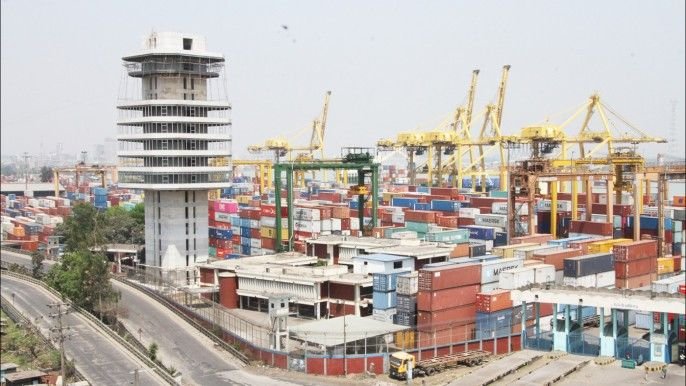
To accelerate investment, the government plans to implement a Multisectoral Logistics Master Plan supported by clear investment guidelines. Public investment will focus on large-scale infrastructure, port expansion, and digital backbones, while private and PPP investments are encouraged in warehousing, inland container depots, cold chains, logistics parks, and multimodal hubs.
Process simplification and regulatory harmonisation are also key priorities. The policy promotes automation, digital certification, and integrated trade facilitation reforms. A national digital logistics platform, aligned with National Data Governance Infrastructure standards, will serve as a central data interface, supported by internationally recognised cybersecurity protocols.
Recognising that infrastructure alone is insufficient, NLP 2025 places strong emphasis on workforce development, safety, security, and regulatory compliance. A skilled logistics workforce capable of operating modern, technology-driven systems is positioned as essential for sustainable sector growth.
To ensure accountability, a three-tier institutional framework has been proposed. Strategic oversight will rest with the National Council for Logistics Development, coordination will be led by the National Logistics Development Coordination Committee, and a dedicated Logistics Monitoring Unit under the Prime Minister’s Office will track performance through digital platforms and time-bound action plans.
The National Logistics Policy 2025 represents a major step toward building a modern and competitive logistics ecosystem in Bangladesh. Its success, however, will depend on disciplined implementation, strong institutional coordination, and a stable political and business environment capable of sustaining long-term public and private investment.