








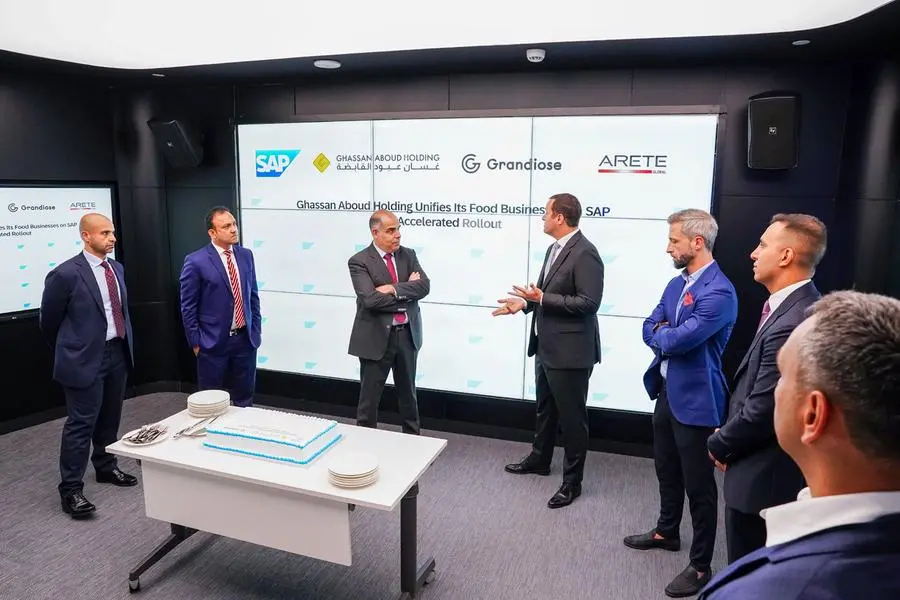
Ghassan Aboud Holding has unified its retail and food business operations on SAS solutions through an accelerated implementation programme, strengthening its data-driven decision-making capabilities and advancing digital transformation across key business units.
The rollout reflects a growing trend among regional enterprises to consolidate operations onto integrated analytics and business intelligence platforms as organizations seek greater visibility, efficiency, and agility in increasingly competitive markets.
By standardizing retail and food operations on a common technology framework, Ghassan Aboud Holding aims to improve operational performance, enhance forecasting capabilities, and create a more unified view of business activities across its portfolio. The move comes as companies across the Middle East invest heavily in data analytics, artificial intelligence, and enterprise modernization initiatives to support growth and improve resilience.
The retail and food sectors are undergoing significant transformation driven by changing consumer expectations, supply chain complexity, digital commerce growth, and increasing demand for real-time business insights. Organizations are increasingly relying on advanced analytics platforms to optimize inventory management, improve customer engagement, strengthen demand forecasting, and enhance operational efficiency.
SAS technologies are widely used for analytics, data management, forecasting, and decision intelligence, enabling organizations to transform large volumes of operational data into actionable business insights. The integration of these capabilities across multiple business units can help improve coordination, reduce inefficiencies, and support faster decision-making.
For diversified business groups such as Ghassan Aboud Holding, enterprise-wide data integration is becoming increasingly important. Businesses often operate across multiple markets, brands, and operational environments, creating challenges related to data consistency, visibility, and performance monitoring. Unified platforms help address these issues by providing centralized access to information and analytics.
The accelerated implementation also reflects the increasing urgency with which organizations are pursuing digital transformation initiatives. Rather than treating modernization as a long-term technology project, many enterprises are prioritizing rapid deployment strategies that deliver measurable business outcomes within shorter timeframes.
The initiative aligns with broader digital transformation trends across the Gulf region, where organizations are leveraging analytics, cloud technologies, artificial intelligence, and automation to improve competitiveness and support expansion. Data-driven operating models are becoming increasingly important as businesses seek to navigate changing market conditions and evolving consumer behavior.
As enterprises generate growing volumes of data from retail operations, supply chains, customer interactions, and digital channels, the ability to extract meaningful insights is emerging as a key competitive advantage. Investments in analytics platforms are therefore becoming central components of corporate technology strategies.
The rollout demonstrates how regional enterprises are increasingly embracing integrated technology ecosystems to support operational excellence and long-term business growth.
Editor’s Note
This deployment highlights an important shift in enterprise digital transformation across the Middle East. The focus is moving from simply collecting data to creating unified intelligence platforms that support real-time decision-making across entire organizations.
Many companies have spent years investing in digital systems, generating vast amounts of operational and customer data. However, fragmented systems often limit the ability to derive meaningful insights. The next stage of digital transformation involves connecting these data sources and enabling organizations to act on information more effectively.
For sectors such as retail and food distribution, this capability is particularly valuable. Demand forecasting, inventory optimization, supply chain visibility, pricing decisions, and customer engagement increasingly depend on access to timely and accurate data. Organizations that can integrate these functions into a single analytical framework gain a significant operational advantage.
The initiative also reflects the growing role of analytics as a foundation for future AI adoption. Artificial intelligence systems rely on high-quality, well-governed data environments to deliver reliable outcomes. Enterprises that establish unified data and analytics platforms today are positioning themselves to take advantage of more advanced AI capabilities in the future.
From a regional perspective, the rollout demonstrates how digital transformation is becoming deeply embedded within traditional industries. Retail, food distribution, logistics, and consumer-facing sectors are increasingly leveraging sophisticated analytics technologies once associated primarily with financial services or large technology companies.
The broader significance lies in the emergence of data as a strategic business asset. Organizations that successfully unify operations, improve visibility, and embed analytics into decision-making processes will be better equipped to respond to market changes, improve efficiency, and create sustainable competitive advantages.
As Gulf economies continue their digital transformation journeys, enterprise analytics platforms will play an increasingly important role in helping businesses move from data collection to intelligence-driven growth.