








Syrian authorities have reported that an international undersea telecommunications cable connected to the country was subjected to an act of sabotage, highlighting the growing vulnerability of critical digital infrastructure and the strategic importance of subsea networks across the Middle East.
According to official statements, the incident affected an international cable system serving Syria and prompted authorities to investigate the circumstances surrounding the disruption. While details regarding the extent of the damage and the parties responsible have not been disclosed, the event underscores increasing concerns about the security and resilience of global communications infrastructure.
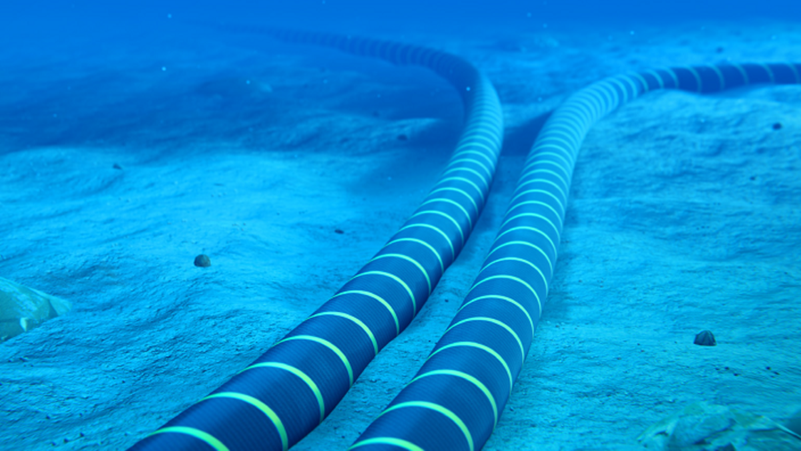
Subsea cables form the backbone of the global internet, carrying more than 95% of international data traffic and connecting countries, businesses and governments to global digital networks. The Middle East, positioned at the crossroads of Europe, Asia and Africa, has become a critical hub for international cable routes, making the region strategically important to global connectivity.
The reported sabotage comes at a time when governments and telecom operators are investing heavily in network resilience, route diversity and digital infrastructure protection. As economies become more dependent on cloud computing, digital services, AI platforms and cross-border data flows, disruptions to international connectivity can have far-reaching economic and operational consequences.
For Syria, international cable infrastructure remains essential for supporting internet services, international communications and access to global digital resources. Any prolonged disruption could affect businesses, public services and connectivity for consumers, depending on the scale of the damage and the availability of alternative routes.
The incident also highlights a broader global trend. In recent years, concerns over the physical security of undersea cable systems have intensified as geopolitical tensions, maritime incidents and suspected acts of sabotage have drawn attention to vulnerabilities within critical communications networks. Governments and infrastructure operators worldwide have responded by increasing monitoring, investing in redundancy and strengthening disaster recovery capabilities.
Across the Middle East, new subsea cable projects continue to be deployed to meet growing demand for bandwidth driven by data centers, hyperscale cloud providers, AI workloads and digital economy initiatives. Countries including Saudi Arabia, the UAE, Egypt, Oman and Qatar are investing in international connectivity infrastructure to strengthen their positions as regional digital hubs.
Industry experts note that resilience increasingly depends not only on deploying new cable systems but also on ensuring route diversity and rapid recovery mechanisms. Operators with multiple international pathways are generally better positioned to maintain service continuity during cable outages or infrastructure failures.
While investigations into the Syria incident continue, the event serves as another reminder of the strategic importance of protecting critical telecommunications infrastructure as digital connectivity becomes increasingly vital to economic development and national security.
Why This Matters
Subsea cables are among the most critical yet often overlooked components of the global digital economy. Disruptions to these systems can impact internet services, enterprise operations, cloud connectivity and international communications across multiple countries.
For governments and telecom operators in the Middle East, the incident reinforces the importance of network resilience strategies, infrastructure redundancy and investments in alternative connectivity routes. As the region continues to position itself as a global digital and data transit corridor, securing critical communications infrastructure will remain a strategic priority.
Editor’s Note
The reported sabotage of an international cable serving Syria reflects a growing global focus on the protection of critical digital infrastructure. While data centers, AI facilities and cloud platforms often dominate discussions around digital transformation, the physical networks that carry international data remain equally important. As Middle Eastern countries expand their roles as global connectivity hubs, the security, redundancy and resilience of subsea cable systems will increasingly become matters of both economic competitiveness and national security.