






SLT-Mobitel is accelerating nationwide fibre deployment, data infrastructure upgrades and artificial intelligence integration as it seeks to reposition itself from a traditional telecom operator into a broader digital technology company.
The operator has laid more than 70,000 kilometres of optical fibre across Sri Lanka and is expanding broadband coverage in response to growing demand for faster connectivity.
Its strategy also includes school fibre connections, submarine cable capacity, domestic data centres, cloud and cybersecurity services, AI training, 5G deployment and expansion into digital verticals such as fintech, healthtech, agritech and edtech.
Fibre rollout remains central to the strategy
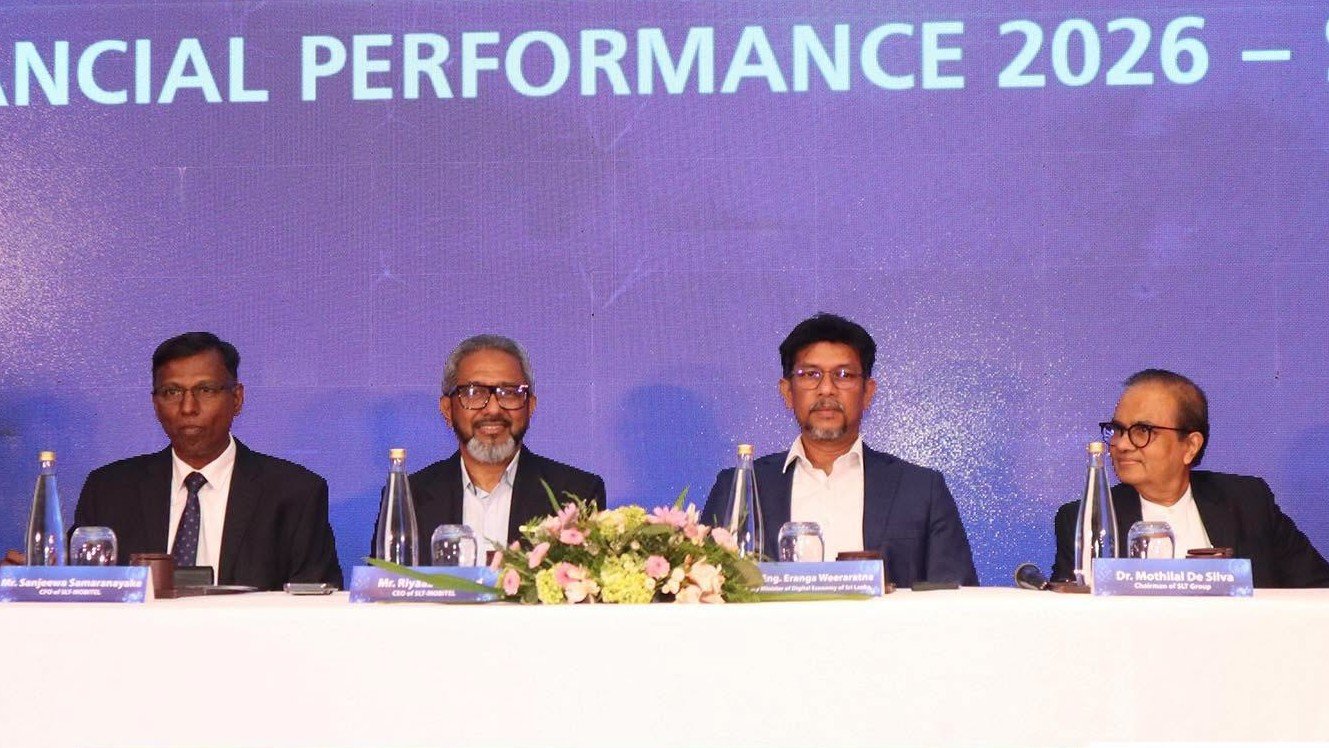
SLT chief executive Riyaaz Rasheed said broadband remains a major investment priority as the company works to strengthen nationwide digital connectivity.
A key part of that effort is a government-backed school digitisation programme targeting more than 6,000 primary and secondary schools.
SLT-Mobitel said the majority have already been connected and that it aims to complete the remaining 1,726 schools by the end of the year.
The company acknowledged that weather and logistical challenges continue to affect the rollout.
Submarine cable and data infrastructure expand together
Sri Lanka is currently connected through five submarine cable systems, while SEA-ME-WE 6 is expected to become operational in early 2027.
SLT-Mobitel said the new cable will help replace ageing capacity and improve international routing redundancy.
The operator is also expanding domestic data centres, cloud infrastructure and cybersecurity capabilities to support enterprise customers and secure traffic.
This combination of international capacity and local hosting infrastructure is increasingly important as demand grows for cloud services, enterprise applications and data-intensive digital platforms.
SMEs targeted with managed digital services
SLT-Mobitel is also expanding its enterprise portfolio, with a particular focus on small and medium-sized businesses.
The company is offering digital management systems, SD-WAN and surveillance solutions as it moves beyond basic connectivity into managed technology services.
That shift gives the operator a larger role in business digitisation while creating new revenue opportunities outside traditional voice and broadband services.
AI becomes part of workforce and platform strategy
Ahead of the second National AI Expo, scheduled for 28 September to 4 October, SLT-Mobitel is training its workforce of nearly 8,000 employees through AI courses.
The company has also established an AI Hub and introduced localised AI frameworks for developers, students and businesses.
The initiative suggests SLT-Mobitel is approaching AI both as an internal capability and as part of a wider national technology ecosystem.
Chairman Mothilal de Silva said the company is seeking to build what he described as a digital Sri Lanka using local talent and infrastructure.
5G rollout to follow demand rather than blanket coverage
SLT-Mobitel plans to take a demand-driven approach to 5G deployment.
Rather than installing base stations uniformly, the operator intends to deploy infrastructure in locations where actual user demand justifies investment.
It is also pursuing active and passive infrastructure sharing with other telecom operators to improve network economics and optimise use of existing assets.
This approach could help reduce capital costs while allowing 5G capacity to be concentrated in areas where adoption is strongest.
Digital adjacencies form the next growth layer
The company also plans to diversify further into digital services including financial technology, healthcare technology, agricultural technology and education platforms.
That expansion reflects a wider telecom industry shift in which operators increasingly use their networks, data centres, cloud platforms and customer relationships as a foundation for adjacent digital businesses.
For SLT-Mobitel, the strategy is intended to reduce reliance on conventional telecom revenue while increasing its role in Sri Lanka’s digital economy.
Why this matters
SLT-Mobitel’s transformation shows how telecom operators are broadening their role from connectivity providers into integrated digital infrastructure companies.
Its strategy links fibre, submarine cables, data centres, cloud, cybersecurity, AI and enterprise services rather than treating them as separate investments.
If executed effectively, that model could give Sri Lanka a stronger domestic foundation for digital services while helping SLT-Mobitel diversify into higher-value technology markets.
Editor’s note
The most important aspect of SLT-Mobitel’s strategy is integration.
Fibre expansion on its own improves access, but its value grows when combined with international capacity, local data centres, cloud platforms, cybersecurity and AI capabilities.
The company’s demand-led 5G approach also suggests a more disciplined investment model. Rather than treating nationwide 5G as an immediate coverage race, SLT-Mobitel appears focused on building capacity where economics and user demand support it.
That could make the broader transformation more sustainable as the operator moves from telecom infrastructure toward a wider digital technology platform.