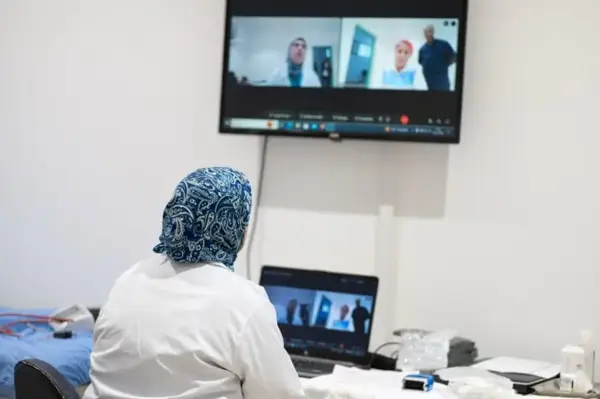










Telemedicine has become a central pillar of Saudi Arabia’s digital health transformation under Vision 2030, but scaling virtual care in primary healthcare settings is exposing ethical and operational pressures that cannot be treated as secondary concerns. The most significant risks fall into four areas: informed consent in remote consultations, privacy and data security, professional boundaries and clinician workload, and equitable access for vulnerable populations.
Informed consent is more complex in virtual settings, where clinicians may struggle to verify patient identity, decision-making capacity, or the presence of others during consultations. In Saudi Arabia, family involvement is culturally significant and often beneficial, but it can also complicate voluntariness and disclosure. Ethical telemedicine practice requires consent models that are explicitly preference-based, where patients are asked who should be involved, what information may be shared, and these choices are clearly documented. Tele-consent tools can help standardize explanations, but they must be accessible across literacy levels and languages and clearly outline the limits of virtual care, data use, and follow-up responsibilities.
Privacy and data security risks intensify as telemedicine relies on mobile devices, third-party platforms, and AI-enabled systems. Patient trust depends on transparent explanations of how data is stored, accessed, and processed, particularly whether sensitive information remains locally hosted. Governance frameworks must move beyond basic compliance toward continuous risk management, strong third-party oversight, incident response readiness, and clear accountability. As AI becomes more embedded in care delivery, oversight must expand to include model auditability, access controls, and safeguards against misuse.
Professional boundaries are also under strain. Telemedicine encourages frequent, informal communication that can blur expectations around availability and extend clinician workload beyond clinic hours. Without clear response-time standards, triage pathways, and documentation protocols, virtual care generates hidden labor. Sustainable telemedicine requires institutional workflow design that formally recognizes and supports virtual workloads through staffing models, escalation procedures, and standardized tools.
Equity is the defining challenge. Telemedicine can either reduce or deepen healthcare disparities depending on how it is designed and implemented. Evidence shows consistent gaps in access and use among older adults, low-income patients, rural communities, and those with limited digital literacy. Equity-focused telemedicine must prioritize simplified interfaces, assisted onboarding, multilingual support, low-bandwidth options, and community-based digital literacy initiatives. Continuous monitoring of utilization and outcomes by demographic factors is essential to ensure virtual care benefits are distributed fairly.
For Saudi primary care, the conclusion is clear: telemedicine offers meaningful benefits, but long-term success depends on embedding ethical, cultural, and equity considerations into operational design. Robust consent practices, privacy-by-design governance, clinician workload protection, and an explicit digital health equity strategy must be foundational elements, not afterthoughts.