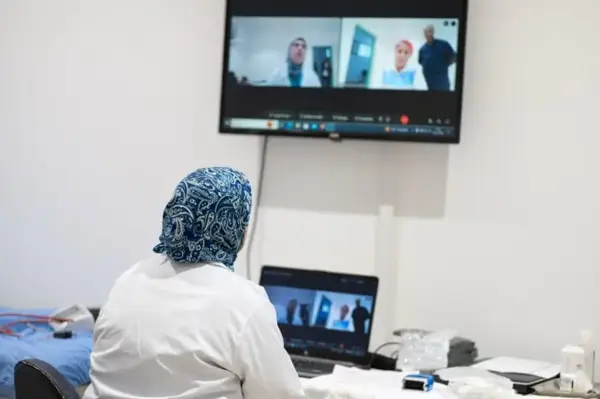









ITWorx Education has entered into a strategic partnership with the Global Medical City of Egypt to strengthen digital healthcare training and support the development of technology-enabled medical education.
The collaboration focuses on integrating digital learning solutions, advanced educational technologies, and modern training methodologies into healthcare education and professional development programs.
As healthcare systems increasingly adopt digital technologies, there is growing demand for medical professionals equipped with skills related to digital health platforms, AI-assisted systems, telemedicine, and data-driven healthcare operations.
The partnership reflects broader efforts in Egypt to modernize healthcare infrastructure and align medical training with evolving technological requirements across the sector.
Digital education platforms are becoming increasingly important in healthcare training due to their ability to scale knowledge delivery, support remote learning, and improve access to specialized expertise.
For ITWorx Education, the agreement expands its role within Egypt’s growing digital learning ecosystem, while the Global Medical City strengthens its position as a technology-enabled healthcare and education hub.
The long-term impact will depend on adoption levels, integration into healthcare training systems, and the ability to produce measurable improvements in healthcare workforce readiness.
Editor’s Note
This is not just an education partnership. It reflects the digitization of healthcare workforce development.
The real story is capability modernization. Healthcare transformation increasingly depends on digitally skilled medical professionals.
The opportunity is scalable healthcare training. Digital education platforms can expand access to advanced medical learning and specialization.
The advantage is sector convergence. Combining healthcare infrastructure with digital education creates stronger workforce readiness ecosystems.
The challenge is practical integration. Medical education must balance digital learning with hands-on clinical training requirements.
The risk is uneven adoption. Technology-enabled education systems require strong institutional support and user readiness.
What to watch next is workforce impact. The real signal will be whether digital healthcare education programmes translate into measurable improvements in medical training quality and healthcare service delivery.