









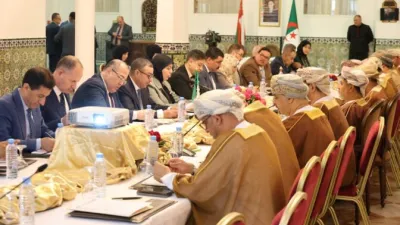
Algeria and Oman have signed a series of agreements spanning ports, airports, and digital cooperation, signaling a broader push to strengthen economic and infrastructure ties between the two countries.
The agreements focus on enhancing collaboration in transport infrastructure while also expanding into digital domains, reflecting the growing convergence between physical logistics networks and digital systems. By aligning on both fronts, the two countries aim to improve operational efficiency, connectivity, and cross-border collaboration.
Digital cooperation is expected to play a key role in modernizing transport operations, including the use of data systems, automation, and smart infrastructure to optimize logistics and mobility. As global trade becomes increasingly digitized, integrating technology into transport networks is becoming essential for competitiveness.
The partnership also highlights a broader trend of regional collaboration, where countries are working together to develop infrastructure and share capabilities across sectors.
For both Algeria and Oman, the agreements present an opportunity to strengthen their positions within regional and international trade networks while advancing their digital transformation agendas.
The long-term impact will depend on implementation, coordination between stakeholders, and the ability to translate agreements into operational outcomes.
Editor’s Note
This is not just a bilateral agreement. It reflects the convergence of physical and digital infrastructure.
The real story is integration. Transport networks are no longer just about ports and airports. They are becoming data-driven systems.
The opportunity is efficiency and connectivity. Combining infrastructure with digital systems can significantly improve logistics performance and trade flows.
The advantage is cross-regional collaboration. Partnerships like this enable knowledge sharing and coordinated development.
The challenge is execution. Aligning multiple sectors and stakeholders across countries is complex.
The risk is slow implementation. Agreements often take time to translate into real infrastructure and systems.
What to watch next is project rollout. The real signal will be how quickly these agreements move from signing to execution on the ground.