







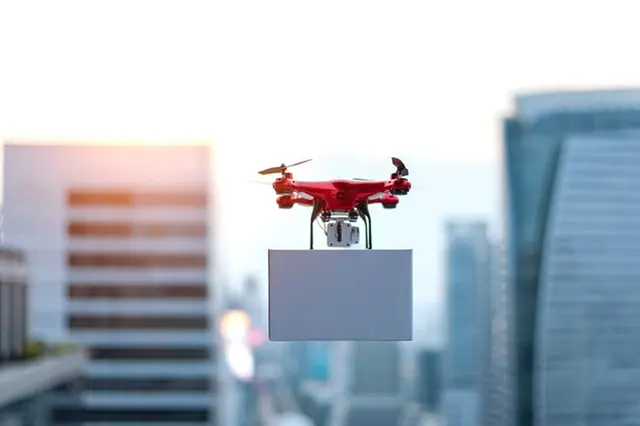
Saudi Arabia’s General Authority of Civil Aviation (GACA) has issued the Kingdom’s first permit for drone-powered medical delivery services during the Hajj season, marking a significant step in the deployment of advanced aviation technologies to support healthcare operations at one of the world’s largest religious gatherings.
The authorization allows unmanned aerial vehicles (UAVs) to transport medical supplies and healthcare materials across Hajj sites, helping improve delivery efficiency and strengthen emergency response capabilities during peak pilgrimage periods.
The initiative is designed to support healthcare providers operating in highly congested environments where rapid movement of critical medical supplies can be challenging. By utilizing drones, authorities aim to reduce delivery times, enhance logistical coordination, and improve access to essential healthcare resources for pilgrims and medical personnel.
GACA said the permit reflects Saudi Arabia’s commitment to advancing innovation within the aviation sector while maintaining strict safety and regulatory standards. The move aligns with the Kingdom’s broader strategy to integrate emerging technologies into public services and accelerate the adoption of smart mobility solutions.
The Hajj pilgrimage has increasingly become a showcase for advanced technologies, including artificial intelligence, smart communications networks, digital identity systems, crowd management platforms, and automated service delivery solutions. Government agencies continue to explore new ways to enhance the pilgrim experience while improving operational efficiency and public safety.
Globally, drone delivery technology is gaining traction in healthcare, where speed and reliability are often critical. UAVs are already being used in several markets to transport medicines, vaccines, laboratory samples, blood products, and emergency medical supplies, particularly in remote or difficult-to-access locations.
Saudi Arabia’s aviation sector is undergoing significant modernization under Vision 2030 and the National Aviation Strategy, both of which emphasize innovation, technology adoption, and the development of future mobility ecosystems.
The issuance of the permit signals growing confidence in the operational readiness of drone technologies and highlights the Kingdom’s ambition to become a regional leader in advanced aviation and autonomous transport solutions.
Editor’s Note
This is more than a drone delivery trial. It represents the convergence of aviation regulation, healthcare logistics, and smart infrastructure in a real-world operational environment. Hajj presents one of the most complex logistics challenges anywhere in the world, making it an ideal testing ground for emerging technologies. By authorizing medical drone deliveries, Saudi Arabia is demonstrating how advanced air mobility can move from concept to practical public service. The development also signals a broader regulatory maturity, as governments increasingly create frameworks that allow autonomous technologies to operate safely within critical sectors. As drone regulations evolve globally, Saudi Arabia is positioning itself among the early adopters exploring scalable commercial and public-sector use cases for unmanned aviation.