










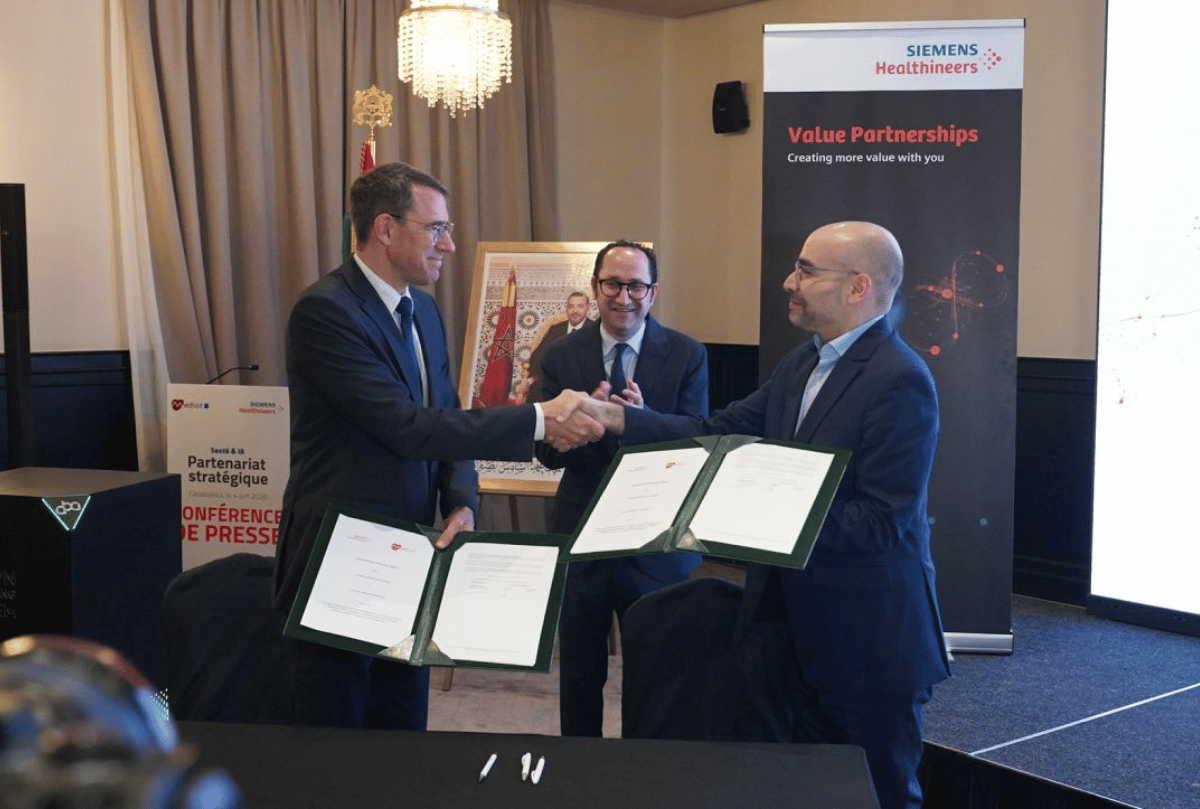
Siemens Healthineers and Mediot AI have entered into a strategic partnership aimed at advancing artificial intelligence-powered healthcare infrastructure across Africa, reflecting growing efforts to leverage digital technologies to improve healthcare delivery, diagnostic capabilities, and operational efficiency across the continent.
The collaboration seeks to integrate AI-driven solutions into healthcare environments, enabling medical institutions to enhance clinical workflows, improve access to diagnostic services, and support more data-driven decision-making. The initiative comes as healthcare systems worldwide increasingly adopt artificial intelligence to address capacity constraints, improve patient outcomes, and optimize resource utilization.
As demand for healthcare services continues to rise across Africa, governments and healthcare providers are exploring digital technologies that can help bridge gaps in infrastructure, workforce capacity, and access to specialized medical expertise. AI is emerging as a key enabler in this transformation, offering tools that can support medical imaging, diagnostics, predictive analytics, workflow automation, and patient management.
The partnership combines Siemens Healthineers’ expertise in medical technology and healthcare systems with Mediot AI’s capabilities in artificial intelligence and digital health innovation. Together, the companies aim to support the development of smarter healthcare environments capable of delivering more efficient and scalable services.
Healthcare infrastructure has become an increasingly important focus area within Africa’s digital transformation agenda. Investments in digital health platforms, connected medical devices, telemedicine services, and health data systems are helping healthcare providers modernize operations while expanding access to care in both urban and underserved regions.
Artificial intelligence is playing an increasingly prominent role in these efforts. AI-powered systems can assist clinicians by analyzing large volumes of medical data, identifying patterns that may be difficult to detect manually, and supporting faster, more informed clinical decisions. Such capabilities are particularly valuable in environments where healthcare resources are stretched and specialist expertise may be limited.
The collaboration also highlights the growing convergence of healthcare, cloud computing, data analytics, and AI infrastructure. Modern healthcare systems increasingly depend on secure digital platforms capable of managing sensitive medical information while supporting advanced analytics and real-time decision-making.
Across Africa, policymakers are recognizing that healthcare modernization is closely linked to broader digital development objectives. Investments in connectivity, cloud infrastructure, cybersecurity, and digital skills are helping create the foundations necessary for more advanced healthcare technologies to be deployed at scale.
As healthcare institutions continue to digitize operations, partnerships between technology providers and healthcare specialists are expected to play an important role in accelerating innovation and improving access to quality healthcare services.
Editor’s Note
This partnership reflects a broader trend that is reshaping healthcare globally: the transition from digitized healthcare to intelligent healthcare.
Many countries have already begun digitizing patient records, hospital operations, and clinical workflows. The next phase involves using artificial intelligence to extract value from that data, enabling healthcare systems to become more predictive, efficient, and responsive.
For Africa, the implications are particularly significant. The continent faces persistent challenges related to healthcare access, workforce shortages, and uneven distribution of medical resources. AI-powered healthcare infrastructure has the potential to help address some of these constraints by extending clinical capabilities, improving diagnostic accuracy, and supporting more efficient use of available resources.
The initiative also underscores the importance of digital infrastructure in healthcare transformation. AI-powered healthcare systems require reliable connectivity, secure data management frameworks, cloud computing resources, and robust cybersecurity protections. Without these foundational elements, the benefits of advanced healthcare technologies can be difficult to realize at scale.
From a digital economy perspective, healthcare is emerging as one of the most important sectors for AI adoption. Successful deployment of AI in healthcare can improve public health outcomes, reduce operational costs, and create new opportunities for innovation across the wider technology ecosystem.
The partnership between Siemens Healthineers and Mediot AI demonstrates how healthcare modernization is increasingly becoming part of broader national and regional digital transformation strategies. As African countries continue investing in digital infrastructure and innovation, AI-enabled healthcare solutions are likely to play an increasingly important role in strengthening resilience, expanding access to care, and improving long-term health outcomes.


