








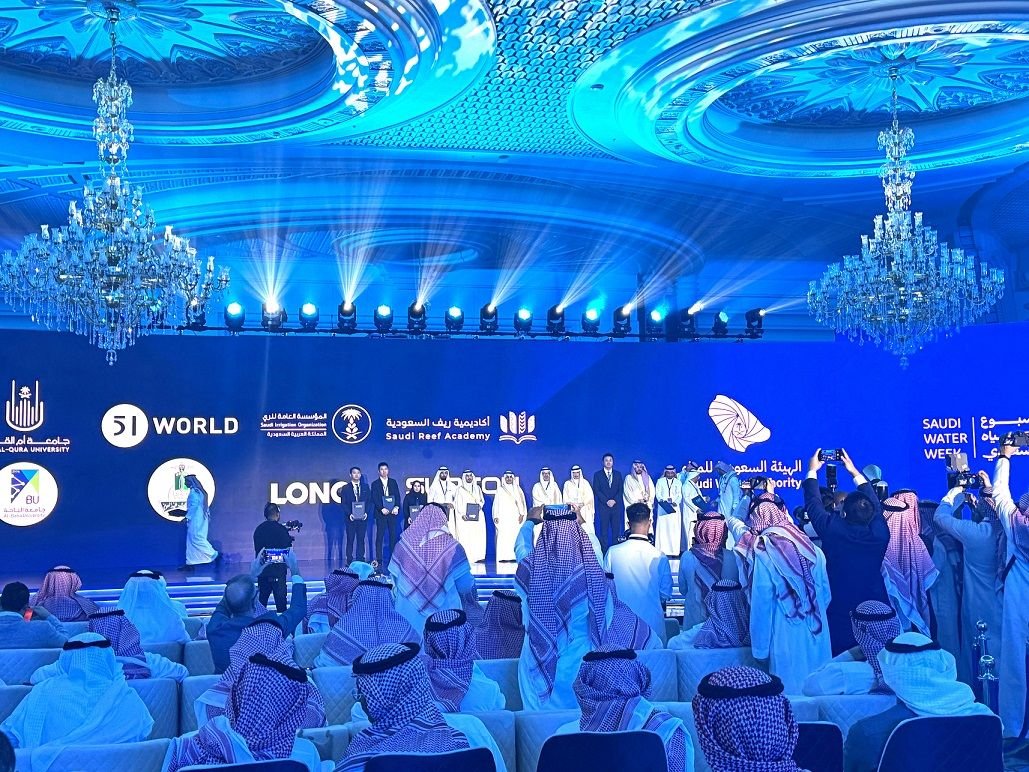
Saudi Water Authority (SWA) and global solar technology company LONGi have signed a memorandum of understanding (MoU) to explore the deployment of advanced solar energy solutions that support sustainable water infrastructure and the Kingdom’s clean energy ambitions.
The agreement focuses on integrating high-efficiency photovoltaic technologies into water sector projects, reinforcing Saudi Arabia’s strategy of combining renewable energy with critical infrastructure to improve operational efficiency, reduce carbon emissions and strengthen long-term resource sustainability.
The partnership reflects the Kingdom’s growing investment in the convergence of renewable energy, digital infrastructure and water security under Vision 2030.
Renewable Energy Powers Critical Infrastructure
Water production and distribution are among the most energy-intensive public utility operations, particularly in arid regions where desalination plays a vital role.
Integrating solar energy into water infrastructure enables utilities to reduce operating costs, improve energy efficiency and lower dependence on conventional power sources while supporting national decarbonization goals.
Advances in photovoltaic technology also make renewable energy increasingly viable for large-scale desalination plants, water treatment facilities and transmission networks.
Industry experts view renewable-powered utilities as a cornerstone of future sustainable infrastructure.
Smart Water Systems Support National Resilience
The agreement also reflects the broader modernization of water infrastructure through the adoption of advanced technologies.
Across the Gulf, utilities are increasingly combining renewable energy with digital monitoring systems, AI-driven analytics and intelligent asset management to optimize water production and distribution.
These technologies improve operational visibility, enable predictive maintenance and help utilities manage growing demand while minimizing resource consumption.
As climate resilience becomes a strategic priority, digitally enabled water infrastructure is expected to play an increasingly important role in national development.
Supporting Saudi Vision 2030
The collaboration aligns with Saudi Vision 2030, which prioritizes renewable energy expansion, environmental sustainability and infrastructure modernization.
Saudi Arabia continues to invest heavily in solar power, green technologies and sustainable public utilities as part of its economic diversification strategy.
Partnerships with global technology leaders such as LONGi help accelerate technology transfer while supporting the deployment of advanced clean energy solutions across critical sectors.
The initiative reinforces the Kingdom’s ambition to become a regional leader in renewable energy and sustainable infrastructure.
Cross-Sector Partnerships Drive Innovation
The transition toward sustainable infrastructure increasingly depends on collaboration between public sector organizations and technology providers.
By combining expertise in water management and solar technology, partnerships such as this can accelerate the adoption of innovative solutions that improve operational performance while advancing environmental objectives.
As governments pursue net-zero targets and resource efficiency, integrated approaches that combine clean energy with critical infrastructure are expected to become more common.
These collaborations also create opportunities for innovation across utilities, smart cities and industrial development.
Why This Matters
Renewable energy is becoming an integral component of critical infrastructure, helping utilities improve efficiency, reduce emissions and strengthen long-term resilience. Integrating advanced solar technologies into water systems supports both sustainability and operational performance.
For Saudi Arabia, the MoU between the Saudi Water Authority and LONGi reinforces national efforts to modernize water infrastructure while expanding renewable energy deployment under Vision 2030. For the wider region, it highlights the growing convergence of clean energy, digital infrastructure and essential public services as countries pursue more sustainable development models.
Editor’s Note
The future of infrastructure lies at the intersection of energy, technology and sustainability. Water utilities, traditionally among the largest consumers of energy, are increasingly adopting renewable power and intelligent operational technologies to improve efficiency and resilience. The partnership between the Saudi Water Authority and LONGi reflects this evolution, demonstrating how clean energy is becoming embedded within critical national infrastructure. As Gulf countries continue investing in sustainable development, integrating renewable energy into essential public services will play a key role in achieving long-term environmental and economic objectives.