
UAE’s Permus Software House Launches Native Arabic AI Application Builder ‘MyndLab’
UAE-based Permus Software House has launched MyndLab, described as the region’s first native Arabic AI application builder, as demand grows…

Technology News and insights in the Middle East, South Asia, and Africa
Technology News and insights in the Middle East, South Asia, and Africa










UAE-based Permus Software House has launched MyndLab, described as the region’s first native Arabic AI application builder, as demand grows…

AMD, Cisco and HUMAIN will form a joint venture to build up to 1 GW of AI infrastructure in Saudi Arabia by 2030, starting with a 100 MW deployment. Combining HUMAIN’s data centres with AMD GPUs and Cisco systems, the initiative strengthens the Kingdom’s push toward an AI-powered digital economy and global leadership in high-performance compute.
Stay ahead this academic year with incredible savings on LG’s innovative electronics and home appliances, designed to empower students and…

Saudi Arabia’s Absher platform completed more than 16.5 million electronic transactions during April, underscoring the Kingdom’s continued progress in digital…

Pakistan’s telecom operators and GSMA have urged the government to ease 5G spectrum auction terms, citing high spectrum costs and risks to investment. They demanded lower reserve prices, rupee-based fees, flexible payment terms, and duty-free imports, warning that delays could cost the economy up to $4.3 billion in five years.

Oman’s FinTech Market to Hit RO 1.1 Billion by 2025, Fueling Investor Confidence and Startup Innovation
Oman’s financial sector is undergoing a transformative shift, with the FinTech market projected to reach RO 1.1 billion by 2025, representing a 16% compound annual growth rate (CAGR). The forecast, revealed at the “Building a Future-Ready Bank” summit by IBS Intelligence and Cedar, signals Oman’s emergence as a regional hub for financial innovation.
The Central Bank of Oman (CBO) has been pivotal in this rise through its Innovation Acceleration Programme and Regulatory Sandbox, fostering pilot projects, testing new technologies, and enabling a tiered digital-bank licensing framework. This forward-looking regulatory environment has propelled the number of FinTech firms from 26 to 42 within a year, with 16 new licenses issued in 2025 and 52 more under review.
Key growth areas include digital payments (22%), personal finance, trading, and crowdfunding (19% each) — signaling strong demand for financial inclusion and smarter investment solutions. Oman’s push toward a digital-first financial system is reinforced by its national AI policy, alignment with Oman Vision 2040, and global recognition as the fourth-best developing economy for ICT-related FDI.
Backed by initiatives like the RO 25 million Inma Fund for SMEs and 14.5 million digital transactions via OmanNet in early 2025, the Sultanate’s FinTech ecosystem offers fertile ground for both local entrepreneurs and global investors. This convergence of innovation, regulation, and investment is positioning Oman as a regional leader in digital finance and technology-driven growth.

Ooredoo Qatar has strengthened its IoT leadership with a unified ecosystem enabling secure, scalable and intelligent device connectivity. The enhanced platform supports real-time management and operational efficiency, empowering businesses to accelerate digital transformation across Qatar.

Women face increasing cybercrimes such as harassment, blackmail, and doxing, with many victims hesitant to seek help due to fear of public exposure and societal pressures. Despite efforts by the Police Cyber Support for Women, experts urge legal reforms, better victim support systems, and enhanced digital literacy to protect women online.
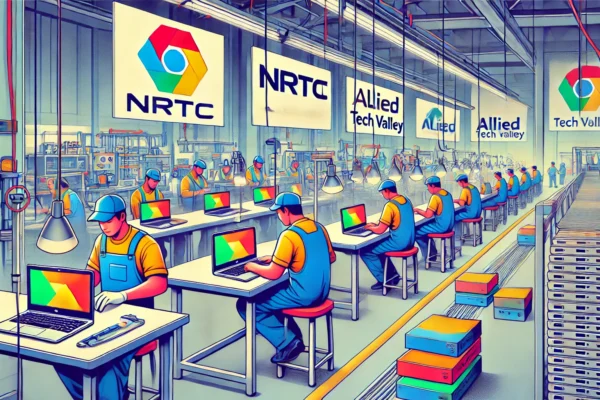
NRTC, Allied, and Tech Valley plan to establish a Google Chromebook assembly line in Haripur, Pakistan. This joint venture aims to provide affordable, high-quality Chromebooks to students, supporting equitable education and technological advancement. The initiative aligns with government priorities and promises economic and educational benefits for Pakistan.

The Ministry of Transport has launched a project to regulate the taxi industry and update the framework for mobile apps and electronic mobility platforms. This initiative aims to ensure fair competition, combat issues like discrimination and ride refusal, and protect consumers’ purchasing power. A new app will guarantee transparent rates by mid-2025.