








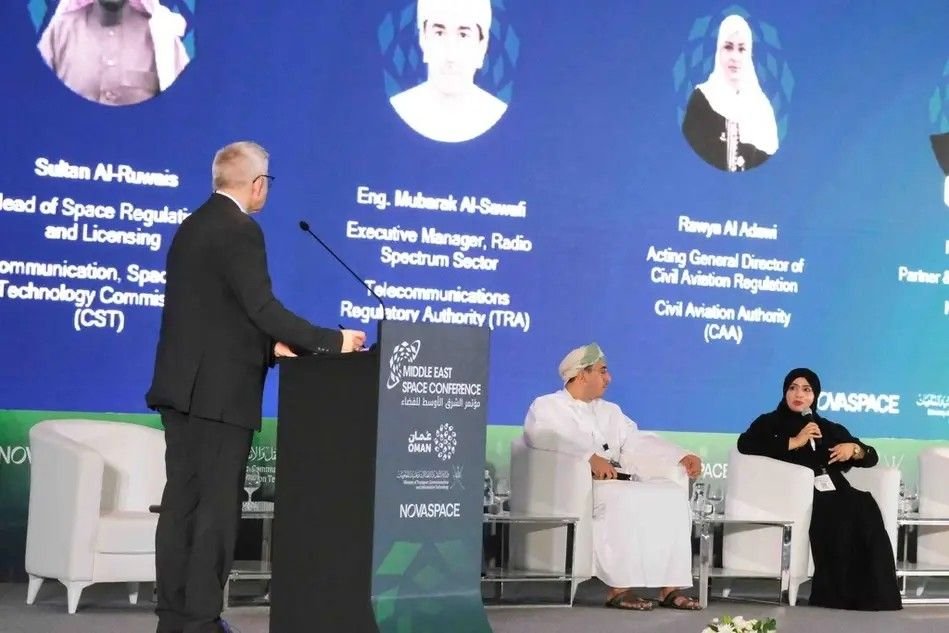
Oman is accelerating the use of satellite technology to enhance connectivity in remote areas and improve exploration for oil, gas, and minerals, following a series of agreements signed during a space conference in Muscat.
State-run OQ Gas Networks (OQGN) signed an agreement with Omantel to use satellites to monitor its 4,000 km gas pipeline network, which is set to expand by 20% by 2027.
In a separate deal, MB Petroleum partnered with US-based Astranis in a $200 million agreement to launch a MicroGEO satellite later this year to support offshore oil rig operations. Meanwhile, Petroleum Development Oman, partly owned by Shell, has begun using satellite monitoring to identify oil reserves that conventional methods may miss.
According to Ali Al Shidhani, Undersecretary of Communications and IT, Oman has attracted nearly $5 billion into its space industry program since 2023. In November, Oman also signed an agreement with Airbus to build its first high-capacity communications satellite system.
Soud Al Shoaili, head of Oman’s space program, said satellites will also help connect remote regions and identify mineral resources such as copper, zinc, and gold. Since 2020, Oman has drawn around $4 billion in mining investments as part of its diversification strategy.
Oman produces around 1 million barrels of crude oil per day, with oil contributing nearly 70% of the economy.