








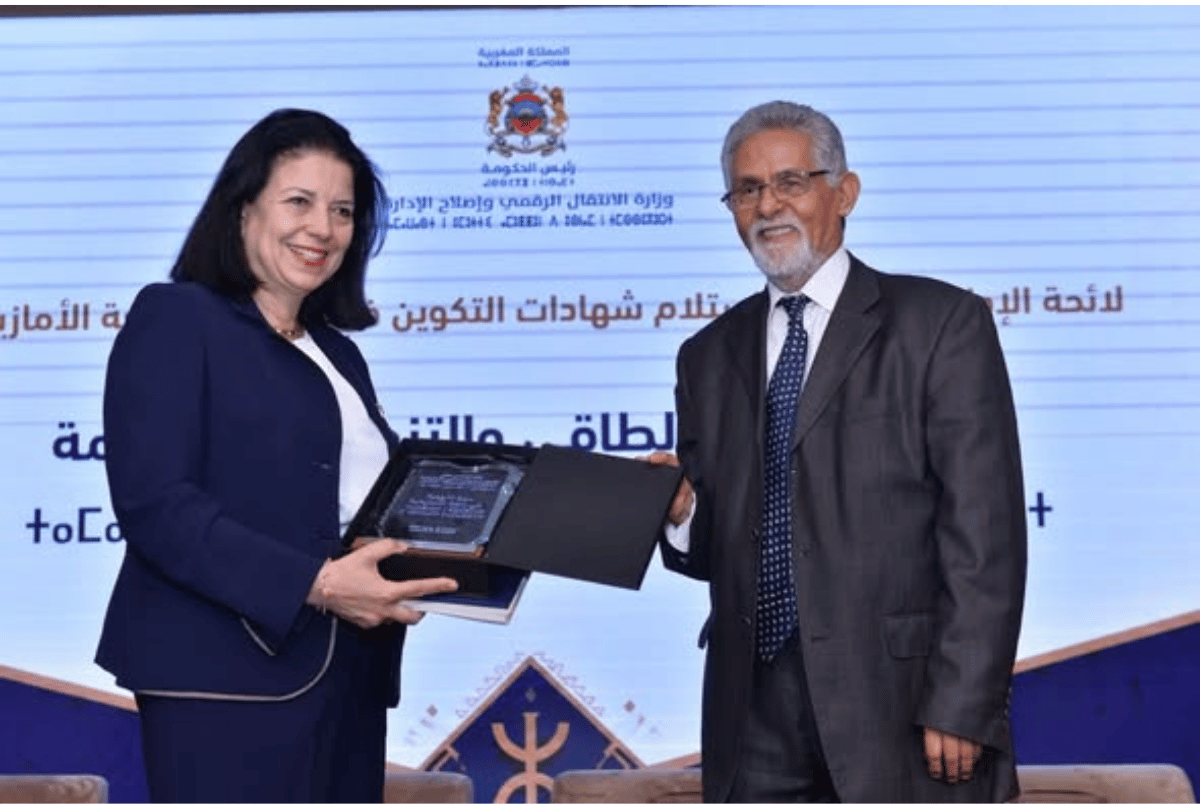
Morocco is accelerating efforts to strengthen Amazigh-language public services through a combination of workforce training programs and digital technologies, supporting broader initiatives to improve government accessibility, digital inclusion and citizen engagement.
The initiative forms part of the country’s ongoing commitment to integrating Amazigh more effectively across public institutions and government services. By leveraging digital platforms and targeted training programs, Moroccan authorities aim to improve access to public services for Amazigh-speaking communities while enhancing the quality and consistency of service delivery.
The program focuses on equipping public sector employees with the skills needed to provide services in Amazigh and increasing the availability of digital tools that support multilingual communication across government channels. These efforts are intended to make public services more inclusive and accessible to a wider segment of the population.
As governments worldwide continue to digitize public services, language accessibility is becoming an increasingly important component of digital transformation strategies. Digital government platforms, online service portals and AI-powered communication tools are creating new opportunities to deliver services in multiple languages while improving user experience and engagement.
In Morocco, digital transformation has become a central pillar of public sector modernization. The integration of Amazigh-language capabilities into government services reflects a broader approach that combines technology adoption with social inclusion objectives. Rather than viewing digitization solely as a technology project, policymakers are increasingly linking digital initiatives to accessibility, equity and citizen participation goals.
Training programs play a critical role in this effort by helping public employees develop linguistic and communication skills necessary to support Amazigh-speaking citizens. At the same time, digital tools can help standardize content, improve service consistency and extend access across online and physical service channels.
The initiative also aligns with Morocco’s broader investments in digital government infrastructure, public service modernization and digital inclusion. Governments across Africa and the Middle East are increasingly adopting technology-driven approaches to improve citizen services while ensuring that underserved communities are not excluded from digital transformation efforts.
Advances in artificial intelligence, machine translation and natural language processing are expected to further enhance multilingual public service delivery in the future. These technologies can help governments scale language support capabilities while improving accessibility across digital platforms, contact centers and public information systems.
As public sector organizations continue to expand digital service offerings, the ability to support multiple languages effectively is becoming an important factor in ensuring that digital transformation benefits all citizens.
Why This Matters
Morocco’s initiative demonstrates that successful digital transformation is not solely about deploying new technologies but also about ensuring services remain accessible and inclusive. By combining workforce training with digital tools, the country is addressing both the technological and human dimensions of public service modernization.
For governments across the Middle East and Africa, the program provides an example of how digital inclusion strategies can be integrated into broader digital government initiatives, helping ensure that linguistic and cultural diversity is reflected in public service delivery.
Editor’s Note
As governments increasingly digitize citizen services, language accessibility is emerging as a critical component of digital inclusion. Morocco’s efforts to expand Amazigh-language public services highlight a growing recognition that digital transformation must be designed around citizens, not just technology platforms. The convergence of workforce development, multilingual capabilities and digital tools could become an increasingly important model for governments seeking to make digital services more equitable, accessible and effective for diverse populations.