

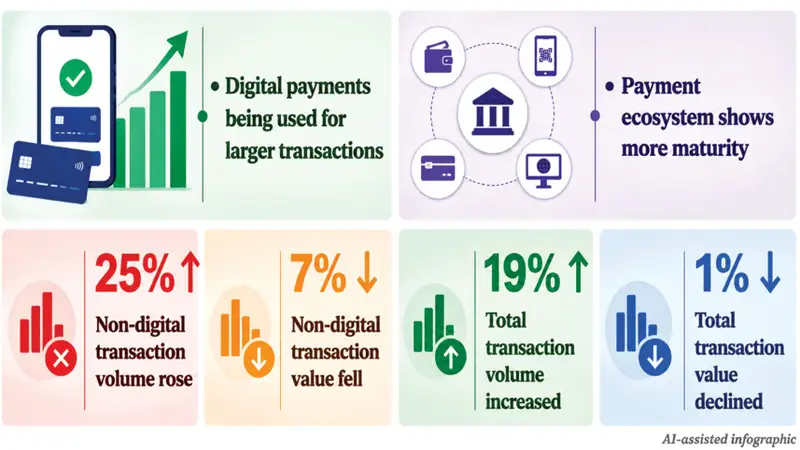
Bangladesh recorded a 13% year-on-year increase in both the volume and value of digital transactions in 2025, underscoring the rapid expansion of the country’s digital payments ecosystem and the growing role of electronic financial services in everyday economic activity.
The growth highlights the continued momentum behind Bangladesh’s digital transformation efforts, driven by rising adoption of mobile financial services, internet banking, electronic fund transfers and digital merchant payments.
According to industry data, digital payment channels processed significantly higher transaction volumes and values throughout 2025, reflecting increased consumer confidence in electronic financial services and broader acceptance of cashless payment methods among businesses.
Mobile Financial Services Continue to Drive Growth
The expansion of digital transactions has been fueled largely by the widespread adoption of mobile financial services (MFS), which have become a cornerstone of Bangladesh’s financial inclusion strategy.
Platforms such as bKash, Nagad and Rocket continue to expand their user bases, enabling millions of consumers to conduct person-to-person transfers, merchant payments, utility bill settlements, salary disbursements and government transactions digitally.
The growing penetration of smartphones and mobile internet services has further accelerated digital payment adoption, making financial services more accessible to previously underserved populations.
Digital Payments Becoming Mainstream
The rise in both transaction volume and value suggests that digital payments are becoming increasingly embedded in Bangladesh’s economy rather than serving as a supplementary payment channel.
Consumers are using digital platforms for a broader range of transactions, including retail purchases, e-commerce payments, transportation services and recurring household expenses. Businesses are also increasingly accepting electronic payments to improve efficiency and respond to evolving customer preferences.
This shift is helping create a more connected financial ecosystem while reducing reliance on cash-based transactions.
Supporting Financial Inclusion and Economic Modernization
Digital payments have become a key pillar of Bangladesh’s broader financial inclusion and economic modernization agenda.
Electronic payment systems can help improve transparency, reduce transaction costs and provide individuals with access to formal financial services. For small businesses and entrepreneurs, digital payments offer opportunities to participate more effectively in the formal economy while improving financial record-keeping and access to financing.
Government initiatives promoting digital financial services, combined with investments in payment infrastructure and fintech innovation, have contributed to the sector’s continued growth.
Fintech Innovation Expanding the Ecosystem
The increase in digital transaction activity also reflects the growing maturity of Bangladesh’s fintech sector. Financial institutions and technology providers continue to introduce new payment products, QR-based solutions, digital wallets and value-added financial services designed to improve convenience and user experience.
As the ecosystem evolves, interoperability between financial service providers and enhanced digital infrastructure are expected to play an increasingly important role in supporting future growth.
Industry stakeholders note that continued investment in cybersecurity, digital literacy and consumer protection will be essential to maintaining trust and encouraging broader adoption of digital financial services.
Why This Matters
Digital payments are becoming critical infrastructure for modern economies. Rising transaction volumes indicate stronger financial inclusion, greater economic formalization and increased participation in digital commerce.
For Bangladesh, sustained growth in digital transactions supports national objectives related to financial inclusion, digital transformation and economic efficiency. It also creates new opportunities for fintech innovation and broader digital economy development.
Editor’s Note
Bangladesh’s 13% growth in digital transaction volume and value demonstrates that the country’s transition toward a digital economy is gaining momentum. The significance extends beyond payment convenience. Digital financial ecosystems create the foundation for e-commerce, fintech innovation, government digitization and broader economic participation. As adoption continues to rise, the next challenge will be deepening usage, improving interoperability and ensuring that digital financial services remain accessible, secure and inclusive for all segments of society.