







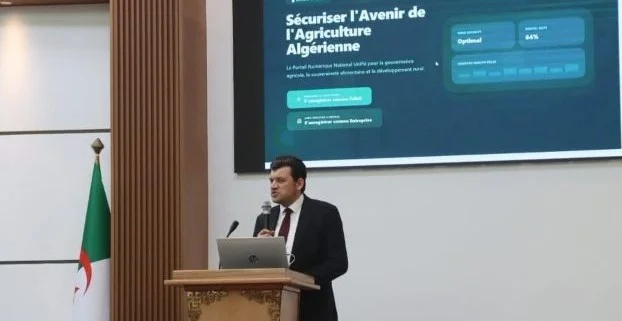
Algeria has launched a National Agricultural Information System (NAIS), marking a significant step in the country’s digital transformation strategy by modernizing agricultural data management, improving policymaking and strengthening food security through digital technologies.
The new platform will centralize agricultural data, providing government agencies with more accurate and timely information to support planning, resource allocation and sector management. By digitizing agricultural information, Algeria aims to improve operational efficiency, enhance transparency and enable more data-driven decision-making across the country’s agricultural ecosystem.
The initiative forms part of Algeria’s broader digital transformation agenda, which is expanding the use of digital platforms across key economic sectors.
Digital Platforms Modernize Agricultural Management
Agriculture is increasingly benefiting from digital technologies that improve the collection, analysis and use of sector-wide data.
National agricultural information systems enable governments to consolidate information on land use, crop production, irrigation, livestock and other key indicators into a unified platform, replacing fragmented manual processes.
Centralized data improves visibility across the agricultural value chain and enables faster, evidence-based policy decisions that support productivity and sustainability.
Industry experts view digital agriculture as an essential pillar of modern food security strategies.
Data-Driven Agriculture Supports Food Security
Reliable agricultural data allows policymakers to better anticipate production trends, manage resources and respond to changing environmental and market conditions.
Digital information systems also improve monitoring of agricultural programmes, facilitate more effective subsidy management and strengthen planning for water usage and rural development.
As climate variability and population growth place increasing pressure on food systems, digital platforms are becoming indispensable tools for building more resilient agricultural sectors.
Digital Transformation Expands Beyond Traditional ICT
The launch demonstrates how digital transformation is extending beyond telecommunications and government services into strategic sectors such as agriculture.
By integrating digital technologies into agricultural administration, Algeria is creating a stronger foundation for future innovations including artificial intelligence (AI), geospatial analytics, precision agriculture and smart farming.
These technologies can help optimize production, improve resource efficiency and support long-term agricultural sustainability.
Supporting Algeria’s National Digital Strategy
The National Agricultural Information System complements Algeria’s wider investments in digital government, cybersecurity, telecommunications infrastructure and digital public services.
Modernizing agriculture through digital platforms also contributes to broader economic diversification by improving productivity, strengthening rural development and supporting national food security objectives.
The initiative reflects the government’s continued focus on using digital technologies to improve public sector performance and economic resilience.
Why This Matters
Digital agriculture is becoming an important component of national digital transformation strategies, enabling governments to improve food security, optimize resource management and strengthen agricultural productivity through data-driven decision-making.
For Algeria, the launch of the National Agricultural Information System modernizes agricultural governance while supporting more efficient planning and sustainable sector development. For the African digital economy, the initiative demonstrates how digital transformation is expanding into critical sectors beyond traditional ICT, creating new opportunities to improve resilience, productivity and public service delivery through technology.
Editor’s Note
Digital transformation is increasingly reaching sectors that have traditionally relied on fragmented and paper-based processes. Agriculture, in particular, stands to benefit significantly from integrated data platforms that improve planning, resource allocation and operational transparency. Algeria’s National Agricultural Information System reflects this broader evolution, recognizing that digital infrastructure is not limited to telecommunications networks but also includes sector-specific platforms that underpin economic development. As governments across Africa invest in AI, cloud computing and digital public infrastructure, agriculture is emerging as one of the next major frontiers for technology-enabled modernization.