







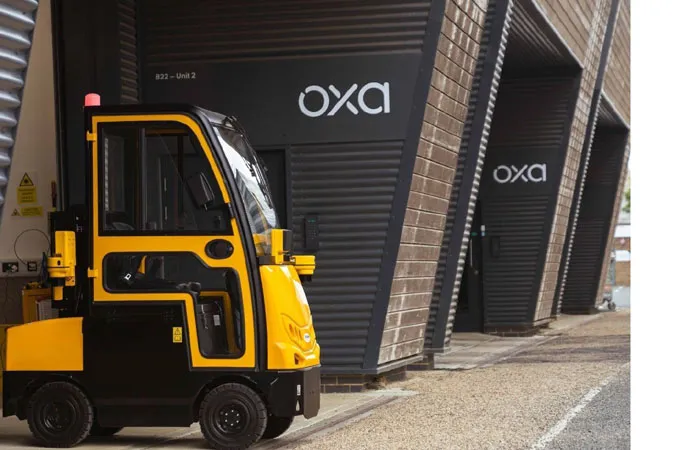
Dubai Future Foundation (DFF) has partnered with autonomous vehicle software company Oxa to launch the Autonomous Logistics Future Lab, a new initiative designed to accelerate the development and deployment of self-driving logistics technologies in the UAE.
The Future Lab will serve as a collaborative platform for testing, validating and advancing autonomous logistics solutions, supporting Dubai’s ambition to become a global leader in smart mobility and next-generation transportation. The initiative will bring together industry, government and technology partners to explore real-world applications of autonomous vehicles across logistics and supply chain operations.
The partnership aligns with the UAE’s broader strategy to leverage artificial intelligence, robotics and autonomous systems to enhance economic competitiveness and build future-ready infrastructure.
Autonomous logistics is reshaping supply chains
Self-driving technologies are increasingly being adopted to improve the efficiency, safety and scalability of logistics operations.
Autonomous vehicles can streamline the movement of goods within warehouses, industrial facilities, ports and urban environments while reducing operational costs and improving delivery reliability. Combined with artificial intelligence and advanced sensors, these systems enable continuous operations and optimize route planning, fleet management and inventory movement.
As global supply chains become more digital, autonomous logistics is emerging as a key driver of operational transformation.
Living labs accelerate innovation
Innovation labs provide controlled environments where emerging technologies can be tested before large-scale commercial deployment.
By bringing together government entities, technology developers and industry partners, these facilities enable organizations to evaluate autonomous systems under real-world conditions, identify regulatory requirements and accelerate commercialization. Living labs also support the development of technical standards and encourage collaboration between research institutions and private sector innovators.
The launch of the Autonomous Logistics Future Lab reinforces Dubai’s approach of using pilot environments to fast-track technology adoption.
Dubai continues investing in future mobility
The UAE has made autonomous transportation and artificial intelligence central components of its long-term economic development strategy.
Through initiatives led by Dubai Future Foundation and other government entities, the emirate is investing in autonomous vehicles, robotics, smart infrastructure and AI-powered mobility solutions. These technologies are expected to improve urban efficiency, enhance sustainability and create new opportunities across logistics, transportation and industrial sectors.
The new lab strengthens Dubai’s position as a regional hub for mobility innovation and advanced technology development.
Public-private partnerships drive emerging technologies
Collaboration between governments and technology companies is becoming increasingly important in bringing autonomous solutions from research into commercial deployment.
Partnerships such as the one between Dubai Future Foundation and Oxa combine regulatory support with technical expertise, enabling faster innovation while ensuring technologies are deployed safely and effectively. These collaborative models are helping accelerate the adoption of AI-driven mobility solutions across multiple industries.
As autonomous technologies mature, such partnerships are expected to play a critical role in shaping the future of logistics.
Why this matters
The launch of the Autonomous Logistics Future Lab demonstrates Dubai’s commitment to advancing AI-powered mobility and intelligent logistics. By creating a dedicated environment for testing autonomous technologies, the initiative supports innovation, strengthens supply chain resilience and reinforces the UAE’s position as a global leader in future transportation.
Editor’s note
Autonomous logistics is becoming one of the fastest-growing applications of artificial intelligence and robotics, with governments and enterprises investing heavily in technologies that improve efficiency and reduce operational complexity. Innovation hubs and testing facilities are increasingly serving as catalysts for commercial adoption by enabling collaboration between regulators, researchers and industry. Dubai’s latest initiative reflects this global trend, highlighting how strategic partnerships are accelerating the transition toward autonomous, data-driven logistics ecosystems.