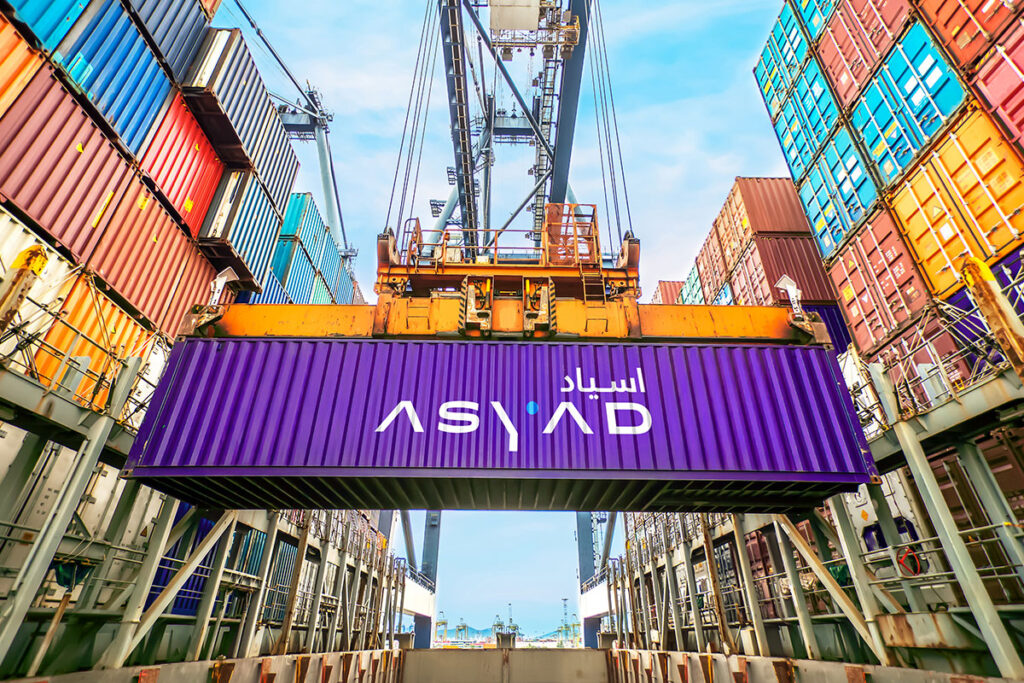








Saudi Ports Authority (Mawani), in cooperation with Folk Maritime and Saudi Basic Industries Corp. (SABIC), has launched the new “Red Sea Express” container shipping service at King Fahad Industrial Port in Yanbu, strengthening regional maritime connectivity and supply chain efficiency across the Red Sea corridor.
The new shipping line will operate with a capacity of up to 1,100 TEUs and connect Jeddah Islamic Port, King Fahad Industrial Port in Yanbu, Egypt’s Ain Sokhna Port, and Jordan’s Port of Aqaba.
The initiative reflects Saudi Arabia’s broader efforts to modernize logistics infrastructure, strengthen maritime trade networks, and position the Kingdom as a regional and global logistics hub under Vision 2030.
New Shipping Corridor to Improve Trade Flow Efficiency
According to Mawani, the Red Sea Express service is expected to accelerate cargo handling operations, reduce waiting times, and improve overall supply chain performance across connected regional markets.
The direct maritime connectivity between Saudi Arabia, Egypt, and Jordan is also expected to support smoother trade flows while reducing transportation costs and shipping durations for exporters and logistics operators.
The service is designed to strengthen operational efficiency across regional maritime logistics networks while supporting growing demand for faster and more resilient trade corridors.
Saudi Arabia continues investing heavily in port modernization, shipping infrastructure, logistics digitization, and integrated transport ecosystems to support long-term trade expansion and economic diversification goals.
Maritime Infrastructure Becoming Central to Economic Diversification
The launch aligns with the Kingdom’s strategy to strengthen non-oil exports and expand its role within regional and international trade routes.
Saudi Arabia has been rapidly expanding investments in ports, logistics zones, industrial infrastructure, and multimodal transport systems as it seeks to become a major logistics gateway connecting Asia, Africa, and Europe.
King Fahad Industrial Port in Yanbu remains one of the Kingdom’s most strategically important industrial ports, with annual handling capacity reaching approximately 210 million tons.
The expansion of shipping services and logistics capabilities is expected to improve export competitiveness while attracting additional investment into industrial and trade-related sectors.
Red Sea Trade Corridors Gain Strategic Importance
The Red Sea region is becoming increasingly important within global trade and logistics ecosystems due to its role connecting major maritime shipping lanes and regional industrial markets.
Countries across the Middle East are investing heavily in port infrastructure, maritime technology, and logistics modernization to strengthen supply chain resilience and improve economic competitiveness.
The development of faster and more efficient regional shipping routes also supports broader efforts to enhance trade integration and economic cooperation across neighboring markets.
Editor’s Note
Maritime logistics infrastructure is becoming a critical pillar of economic diversification strategies across the Gulf. As global supply chains evolve and regional trade corridors gain strategic importance, countries investing in modern ports, integrated logistics networks, and efficient shipping ecosystems are strengthening their position within the future global trade economy.