








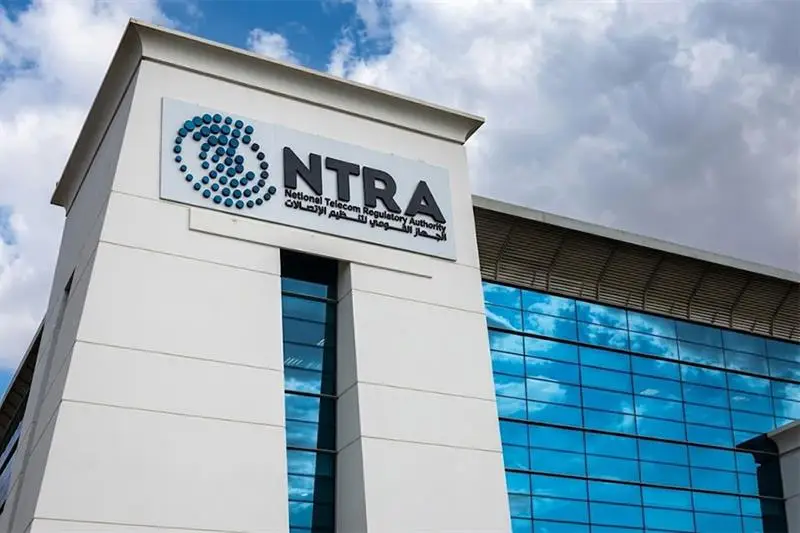
Egypt has completed what the National Telecom Regulatory Authority describes as Africa’s first successful mobile telecommunications trial using the upper 6GHz band, with Telecom Egypt and Huawei achieving data speeds of around 1.7 Gbps per user.
The trial included activation of a mobile base station operating in the 6GHz band and completion of the first data call over the spectrum.
NTRA said the test forms part of its wider work to assess future spectrum requirements for 5G evolution and next-generation mobile services.
Trial reaches 1.7 Gbps per user
During the test, the network achieved data transmission speeds of approximately 1.7 gigabits per second per user.
NTRA said the result demonstrates the potential of the 6GHz band to increase network capacity and improve performance in areas with heavy traffic.
The authority is evaluating the band as a potential additional layer for high-capacity mobile services, particularly as data demand continues to increase.
6GHz seen as a future capacity layer
The 6GHz band is increasingly being studied internationally as a potential resource for advanced mobile broadband.
For mobile networks, the appeal lies in the amount of spectrum available and its ability to support higher throughput in dense environments.
NTRA said potential applications could include AI services, Internet of Things deployments, augmented and virtual reality and cloud-based applications, all of which place heavier demands on mobile infrastructure.
Spectrum planning extends to 2030-2035
NTRA Executive President Mohamed Shamroukh said the 6GHz band is one of the strategic frequency ranges being considered in Egypt’s national spectrum plan for 2030-2035.
The plan is being developed to ensure that sufficient spectrum resources are available as mobile networks evolve and new use cases emerge.
The authority is positioning spectrum as a strategic national resource that needs to be planned well in advance of commercial deployment.
Telecom Egypt and Huawei support technical testing
The trial was conducted with Telecom Egypt and Huawei, combining operator infrastructure with vendor technology under NTRA oversight.
NTRA said such technical trials help assess the performance of emerging spectrum bands before wider regulatory or commercial decisions are taken.
The successful test also supports Egypt’s wider ambition to strengthen its role in advanced telecom infrastructure and spectrum management in Africa.
Why this matters
Egypt’s 6GHz trial is significant because it moves the country from spectrum planning into practical testing of a band that could become important for future mobile capacity.
If adopted more widely for mobile use, upper 6GHz spectrum could provide operators with additional bandwidth in areas where existing mid-band networks face congestion.
For Egypt, early testing gives the regulator more evidence for future spectrum allocation decisions and helps prepare the market for the next stage of 5G evolution.
Editor’s note
The key issue is not simply the 1.7 Gbps speed result, but whether the 6GHz band becomes commercially viable as a new mobile capacity layer.
That will depend on future spectrum policy, device support, network economics and how the band is balanced against other wireless uses.
Egypt’s decision to test it now is strategically important because spectrum planning for the next decade is already under way. The countries that evaluate these bands early will be better placed to make informed choices when mobile traffic and next-generation applications begin to place much greater pressure on existing networks.