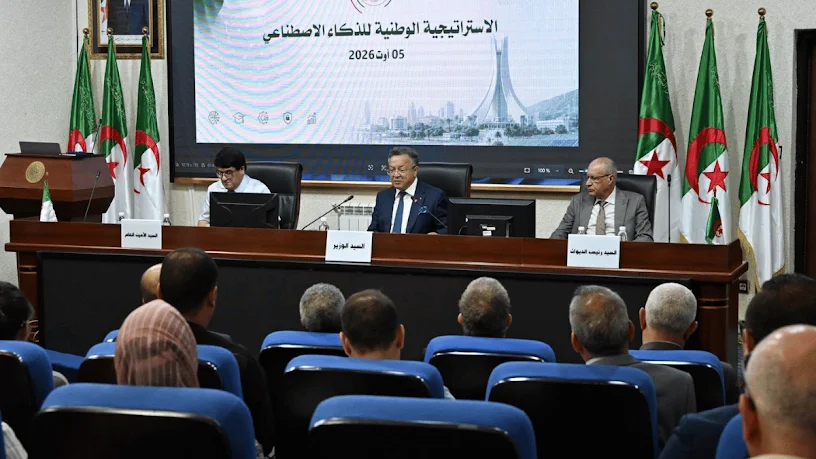







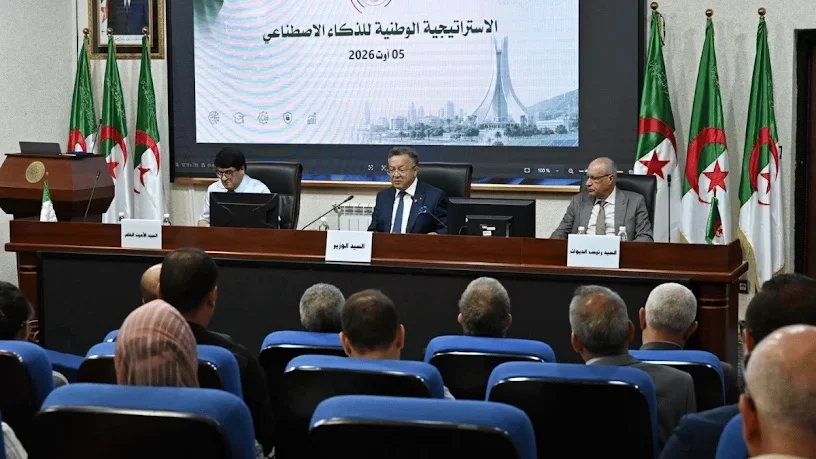
Algeria has agreed a joint inter-ministerial roadmap to deploy artificial intelligence across public services, with the government placing sovereign models, domestic computing infrastructure, national data storage and stronger safeguards at the centre of its strategy.
Kamel Baddari, minister of higher education and scientific research, said the roadmap is intended to move Algeria’s AI programme from policy formulation into implementation while reducing dependence on foreign technology suppliers.
The plan combines infrastructure investment with skills development, research capacity and closer links between universities and emerging technology companies.
Sovereign AI and domestic compute form the core
Four priorities sit at the centre of the roadmap.
Algeria plans to develop sovereign open-source AI models, establish high-performance computing centres, retain national data within domestic infrastructure and strengthen safeguards around public-sector AI applications.
The approach reflects a broader effort to increase technological sovereignty by giving the country greater control over the systems, computing resources and data required to run AI services.
That is particularly important for government use cases, where reliance on external platforms can create concerns around data location, control and long-term operational dependence.
North Africa turns toward more localised digital infrastructure
Algeria’s approach is consistent with a wider shift across North Africa toward local cloud infrastructure and sovereign compute.
Governments in the region are increasingly examining how domestic hosting and computing capacity can reduce dependence on foreign platforms while keeping sensitive public-sector information within national borders.
For AI, this issue is becoming more important because advanced models require not only software, but also substantial compute capacity, data infrastructure and secure operating environments.
Skills development runs alongside infrastructure investment
The roadmap also places significant emphasis on developing domestic AI expertise.
The government is working with universities on training programmes while establishing a dedicated scientific research centre and specialised research units intended to move academic work into industrial applications.
Baddari has linked these efforts to Algeria’s wider ambition to build a knowledge-based economy with greater control over strategic technologies.
The scale of that ambition is reflected in the government’s talent targets.
In June, the first cohort of 105 students graduated from the National Higher School of Artificial Intelligence. Algeria is aiming to train 30,000 AI engineers by 2030.
Startup cluster links research with commercial development
Algeria has also begun building institutional links between research and technology entrepreneurship.
In April, the country launched its first AI and cybersecurity startup cluster at Sidi Abdellah.
The initiative was established jointly by the ministries responsible for higher education, the economy and telecommunications, with the aim of connecting research institutions with emerging technology businesses.
That relationship will be important if Algeria wants its public investment in AI research and skills to translate into commercial products and industrial applications.
Joint committee to oversee implementation
A joint monitoring committee has been established to supervise delivery of the roadmap against a defined timeline.
The structure is intended to keep work across ministries aligned as infrastructure, skills, data, research and public-sector deployment progress in parallel.
Baddari described the roadmap as the point at which Algeria’s AI strategy shifts from planning into execution.
Why this matters
Algeria’s approach is notable because it treats AI sovereignty as a full-stack challenge.
Developing domestic models alone would not provide technological independence without access to compute, secure data infrastructure, skilled engineers and research institutions capable of turning ideas into deployable systems.
By addressing those layers together, Algeria is attempting to build a more self-reliant AI ecosystem that can support both government applications and broader industrial development.
Editor’s note
The real test will be execution at scale.
Algeria has now identified the major building blocks of sovereign AI, including models, compute, data, talent and commercialisation. The harder task is turning those components into operational systems that can be used across government and industry.
If the country can connect its expanding talent pipeline and research base with domestic infrastructure and real applications, the roadmap could become a meaningful foundation for reducing dependence on external AI ecosystems.