









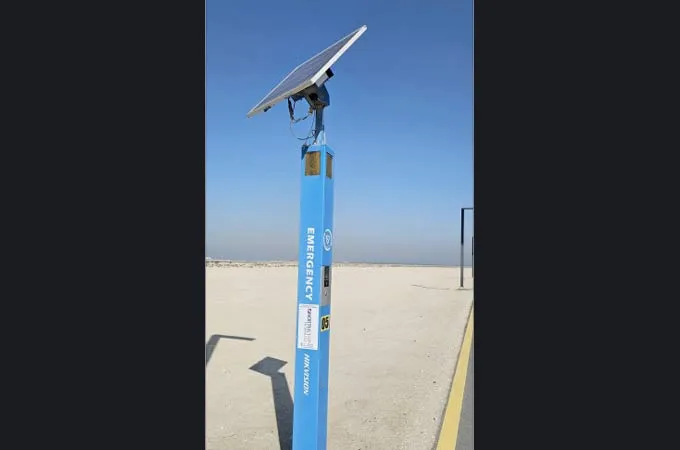
Bahrain has introduced solar-powered emergency calling units along the NBH cycling loop, integrating smart infrastructure and sustainability into public safety and urban mobility initiatives.
The deployment is designed to improve safety for cyclists and visitors by providing accessible communication points powered through renewable energy. The units can support emergency response coordination while reducing dependence on traditional grid infrastructure.
The initiative reflects a broader trend toward embedding smart technologies into urban and recreational infrastructure as Gulf countries continue investing in connected and sustainable city environments. Solar-powered systems are increasingly being adopted in public infrastructure projects to improve operational resilience and support environmental goals.
Bahrain’s approach also highlights how digital and communications infrastructure is expanding beyond traditional telecom environments into public spaces and quality-of-life projects.
As cities modernize, smart infrastructure deployments are becoming an important component of broader urban development strategies focused on sustainability, safety, and user experience.
The long-term impact will depend on operational reliability, public usage, and how effectively such systems integrate into broader smart city and emergency response frameworks.
Editor’s Note
This is not just a public safety upgrade. It reflects the spread of smart infrastructure into everyday urban environments.
The real story is connected public space design. Cities increasingly integrate communication, safety, and sustainability directly into physical infrastructure.
The opportunity is smarter urban mobility. Connected safety systems can improve user confidence and encourage healthier, more active lifestyles.
The advantage is energy independence. Solar-powered infrastructure improves resilience while supporting sustainability goals.
The challenge is maintenance and integration. Smart infrastructure requires continuous operational oversight and reliable connectivity.
The risk is isolated deployment. Individual smart projects create limited impact unless integrated into broader urban systems.
What to watch next is smart city layering. The real signal will be how governments connect public safety, mobility, sustainability, and digital infrastructure into unified urban ecosystems.