









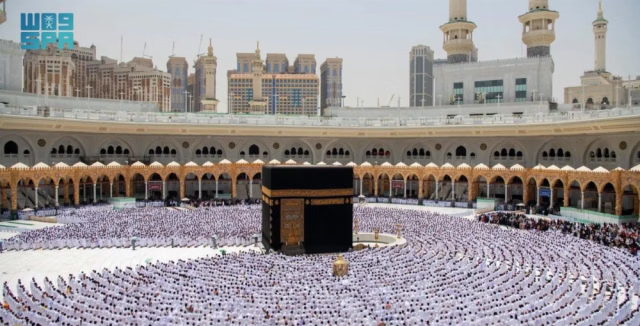
Saudi Arabia has introduced a new digital contracting service for the upcoming Umrah season, further expanding the Kingdom’s push to digitize pilgrimage operations and streamline religious tourism services.
The platform is designed to facilitate electronic contracting processes between Umrah companies, service providers, and relevant stakeholders, reducing administrative complexity and improving operational efficiency. The move aligns with broader efforts to modernize pilgrimage management through digital systems and integrated service platforms.
As millions of pilgrims travel to the Kingdom annually for Hajj and Umrah, digital infrastructure is becoming increasingly important in managing logistics, accommodation, transportation, licensing, and service coordination at scale.
Saudi Arabia has been aggressively expanding digital services tied to religious tourism under Vision 2030, positioning technology as a key enabler of efficiency, transparency, and user experience enhancement.
The launch also reflects broader adoption of digital government and e-service platforms across the Kingdom, where administrative and commercial processes are increasingly shifting toward paperless workflows and automated systems.
The long-term impact will depend on adoption by service providers, system interoperability, and the platform’s ability to support high transaction volumes reliably during peak pilgrimage periods.
Editor’s Note
This is not just a new government service. It reflects the digitization of religious tourism infrastructure at scale.
The real story is operational modernization. Managing pilgrimage ecosystems increasingly depends on integrated digital systems rather than manual coordination.
The opportunity is efficiency and transparency. Digital contracting can reduce delays, improve oversight, and simplify stakeholder coordination.
The advantage is ecosystem integration. Saudi Arabia continues building interconnected digital layers around pilgrimage operations.
The challenge is scale reliability. Systems supporting millions of users require strong resilience and operational continuity.
The risk is platform fragmentation. Multiple disconnected systems can reduce efficiency gains and complicate user experiences.
What to watch next is full pilgrimage digitization. The real signal will be how deeply digital identity, payments, logistics, and service management become integrated into the broader Umrah and Hajj ecosystem.