








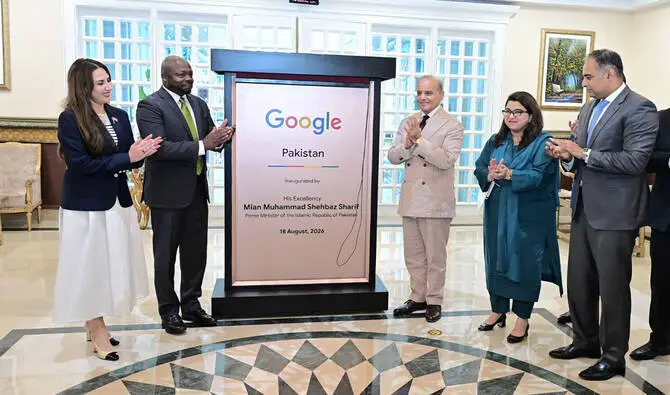
Google has formally established a corporate presence in Pakistan, marking a significant expansion of the company’s engagement with the country’s digital economy as it deepens investment in artificial intelligence, digital skills, local businesses and technology infrastructure.
The development was announced during a meeting in Islamabad between Prime Minister Shehbaz Sharif and a nine-member Google delegation led by Wilson White, vice president of global affairs and public policy.
US Chargé d’Affaires Natalie Baker also attended the meeting.
The government framed Google’s local presence as part of Pakistan’s wider Digital Nation Pakistan agenda and its efforts to strengthen the country’s position as a regional technology and export hub.
Google opens local office as Pakistan pushes digital transformation
Sharif welcomed Google’s decision to establish an office in Pakistan and said the country is moving through a broader digital transformation that includes digitisation of the economy, upgrades to IT infrastructure and expansion of AI and technology training.
He also highlighted Pakistan’s large youth population as a key part of the country’s digital growth strategy.
The government is seeking greater cooperation with global technology companies as it works to expand local skills, exports and technology adoption.
Google said its decision to establish a local office reflects confidence in Pakistan’s digital potential and talent base.
Google cites Rs3.9 trillion in economic activity
White said Google had contributed more than Rs3.9 trillion in economic activity for Pakistani businesses and households over the past decade.
He also said the company’s activities had helped support more than 960,000 jobs.
The figures were presented by Google and were not independently detailed in the source material.
The company said it is supporting Pakistan’s goal of reaching $30 billion in IT exports through investment in talent, manufacturing, hardware export infrastructure and local businesses.
More than one million Pakistanis trained through Google programmes
Google also highlighted its role in digital skills development.
White said more than one million Pakistanis had improved their digital skills through Google career certificates and partnerships with schools and teachers.
The company is positioning workforce development as a central part of its long-term presence in the country, particularly as demand grows for AI, software and digital economy capabilities.
Sharif called for further expansion of Google’s efforts to train and empower young Pakistanis.
Gemini subscriptions to be offered free to students for one year
Google also announced that Gemini subscriptions would be provided free of charge for one year to students across Pakistan.
The move could expand access to generative AI tools among students and support greater use of AI in education, research and skills development.
The source does not specify eligibility criteria, the exact Gemini subscription tier or the rollout process.
Google links Pakistan presence to AI-led growth
Farhan Qureshi, Google’s cluster director for Pakistan, the Philippines and Thailand, said the company’s new local office is intended to strengthen its support for Pakistan’s digital transformation.
He said Google sees potential for Pakistan to develop into a regional technology and export hub, with AI playing an increasingly important role in future growth.
The local presence could also give Google a more direct channel for engaging with government, businesses, educators and developers.
Why this matters
Google’s decision to establish a corporate presence in Pakistan goes beyond a symbolic office opening.
It creates the potential for deeper local engagement around AI, skills, digital exports, hardware manufacturing and business support.
For Pakistan, the move could strengthen its ability to attract global technology investment while improving access to advanced tools and training.
The scale of the opportunity will depend on whether Google’s local presence translates into sustained investment, wider ecosystem partnerships and commercially meaningful projects.
Editor’s note
The most important shift is that Google is moving from serving Pakistan largely as an external market toward building a more formal local presence.
That could improve coordination with government and industry and create a stronger foundation for AI adoption, developer support and technology exports.
The next test will be execution. Office presence, training commitments and free AI access are important signals, but the longer-term impact will depend on whether they lead to deeper investment in infrastructure, products, local talent and export-oriented technology activity.