









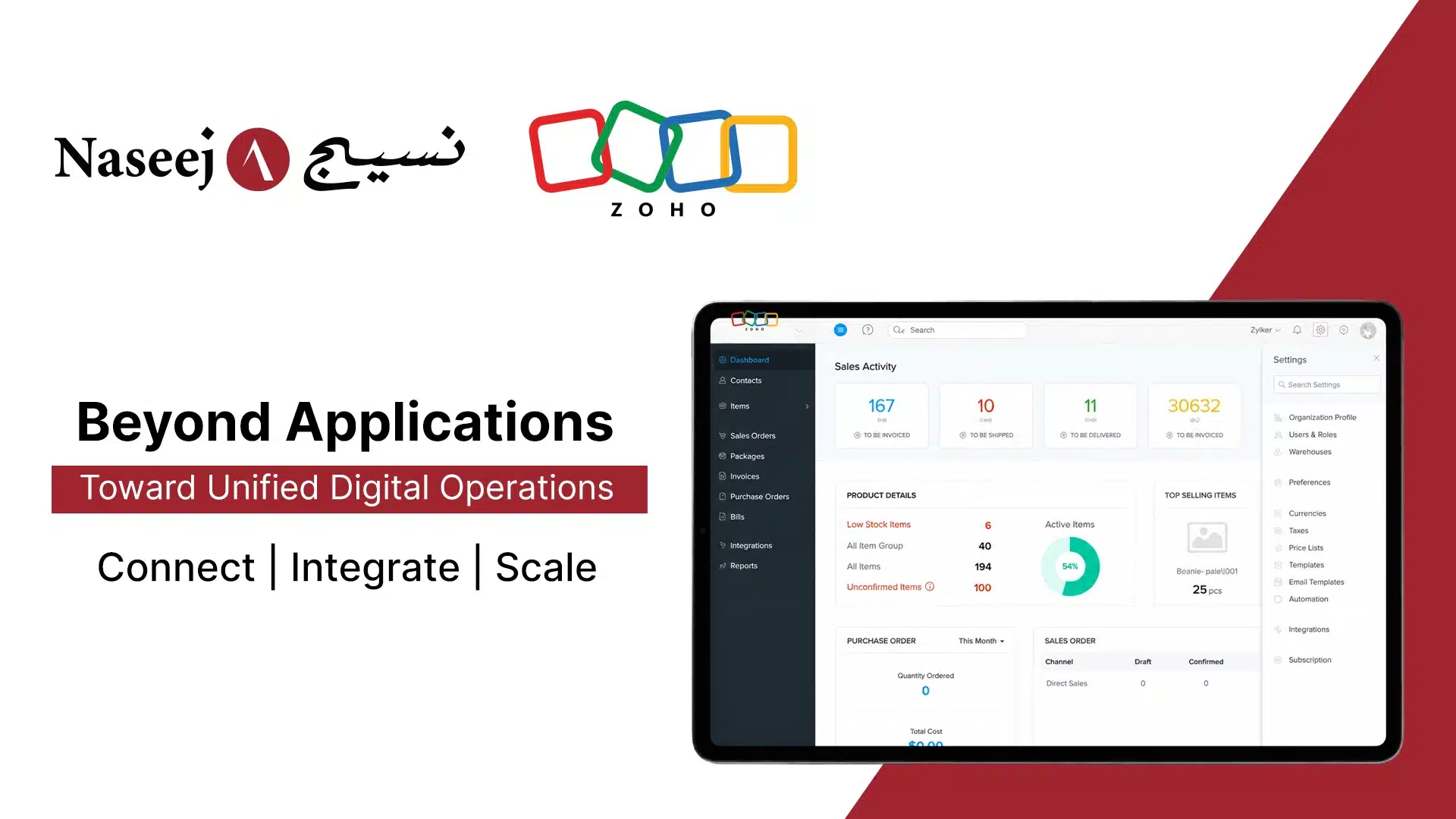
Naseej has entered into a strategic partnership with Zoho to help organizations across Saudi Arabia and the Gulf region accelerate digital transformation initiatives through integrated business applications, automation tools, and cloud-based enterprise solutions.
The collaboration aims to support businesses and institutions seeking to modernize operations, improve productivity, and streamline workflows as demand for digital services and cloud-enabled platforms continues to grow across the region. The partnership combines Naseej’s regional expertise in digital transformation and enterprise technology with Zoho’s portfolio of business software applications covering customer relationship management, finance, human resources, collaboration, and operational management.
As organizations across the GCC pursue digital-first operating models, enterprise software platforms are becoming increasingly important in helping businesses manage growing volumes of data, automate routine processes, and improve decision-making. Companies are under pressure to increase efficiency while adapting to evolving customer expectations and a more competitive digital economy.
Through the partnership, organizations will gain access to scalable digital solutions designed to support operational modernization across multiple functions. Cloud-based business platforms are increasingly replacing fragmented legacy systems, enabling businesses to consolidate processes, improve visibility across departments, and create more agile operating environments.
The agreement reflects broader digital transformation trends across Saudi Arabia and the Gulf region, where governments and private sector organizations are investing heavily in cloud adoption, automation, artificial intelligence, and digital service delivery. These investments are closely aligned with national economic diversification strategies that emphasize productivity, innovation, and knowledge-based growth.
Saudi Arabia in particular has emerged as one of the region’s fastest-growing technology markets, supported by Vision 2030 initiatives aimed at accelerating digital adoption across both public and private sectors. Organizations are increasingly seeking integrated technology platforms that can support expansion while reducing operational complexity.
For enterprises, the adoption of unified software ecosystems can deliver benefits beyond efficiency gains. Modern business platforms provide access to analytics, workflow automation, customer insights, and collaboration tools that help organizations respond more effectively to market changes and business opportunities.
The partnership also reflects the growing demand for localized implementation expertise. While cloud software adoption continues to increase globally, successful digital transformation often depends on tailoring solutions to local regulatory requirements, operational needs, and industry-specific challenges. Regional technology partners play an important role in helping organizations maximize the value of digital investments.
As businesses across the GCC continue to modernize operations, partnerships between technology providers and regional implementation specialists are expected to play a key role in accelerating adoption and supporting long-term digital transformation goals.
Editor’s Note
This partnership highlights a broader shift taking place across the Gulf’s digital economy. The conversation around digital transformation is moving beyond infrastructure deployment and connectivity investments toward the modernization of day-to-day business operations.
While cloud infrastructure, data centers, and broadband networks provide the foundation, enterprise software platforms are increasingly becoming the tools through which organizations realize measurable productivity gains and operational improvements. The next phase of digital transformation will be defined not only by technology adoption but by how effectively organizations integrate digital capabilities into core business processes.
For Saudi Arabia and the wider GCC, this trend is particularly significant as governments seek to improve private sector productivity and expand knowledge-based industries. Small and medium-sized enterprises, as well as large organizations, are increasingly looking for scalable digital tools that can support growth without requiring extensive internal technology resources.
The partnership also reflects the growing importance of cloud-based business ecosystems in supporting economic diversification. As organizations digitize finance, customer engagement, procurement, human resources, and operational workflows, they generate data that can later support analytics, automation, and AI-driven decision-making.
Ultimately, successful digital transformation is not solely about adopting new technologies. It is about creating connected operational environments that improve efficiency, strengthen competitiveness, and enable organizations to adapt more quickly to changing market conditions. Partnerships that combine global technology platforms with regional implementation expertise are likely to become an increasingly important component of the GCC’s digital development landscape.