








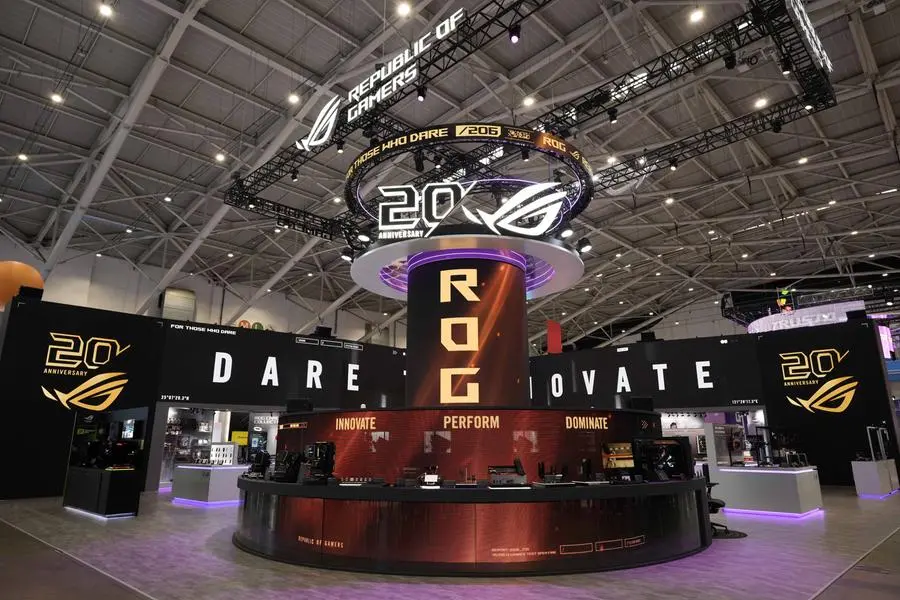
ASUS Republic of Gamers (ROG) has unveiled its 2026 gaming lineup for the UAE market following its showcase at Computex, highlighting the continued growth of the gaming sector and the increasing demand for high-performance computing technologies across the region.
The latest portfolio includes new gaming laptops, desktops, handheld devices, peripherals, and performance-focused hardware designed to support increasingly sophisticated gaming experiences. The announcement comes as the gaming industry continues to evolve into a significant component of the digital economy, driving demand for advanced computing infrastructure, artificial intelligence-enabled devices, and next-generation user experiences.
Gaming has emerged as one of the fastest-growing technology segments globally, with growth extending beyond entertainment into areas such as esports, content creation, live streaming, virtual experiences, and digital communities. The Middle East, and particularly the UAE, has become an increasingly important market as governments and private sector organizations invest in digital infrastructure and gaming ecosystem development.
The UAE’s gaming market has benefited from high internet penetration, widespread smartphone adoption, advanced connectivity infrastructure, and a digitally engaged population. These factors have contributed to rising demand for premium gaming hardware capable of supporting high-performance applications and immersive digital experiences.
The technologies showcased by ASUS ROG reflect broader trends shaping the computing industry. Modern gaming devices increasingly incorporate artificial intelligence capabilities, advanced graphics processing, intelligent power management, and enhanced cooling systems to meet the performance requirements of next-generation games and content creation workloads.
Gaming hardware manufacturers are also responding to changing consumer expectations. Devices are increasingly designed to serve multiple purposes, supporting gaming, professional content creation, software development, AI-assisted workflows, and productivity applications. This convergence is blurring traditional distinctions between consumer and professional computing markets.
The Computex showcase highlighted the growing importance of high-performance computing in a market increasingly influenced by AI applications and graphics-intensive workloads. Technologies originally developed for gaming are often adopted across sectors such as engineering, design, media production, simulation, and artificial intelligence research.
The announcement also reflects the continued expansion of the wider gaming ecosystem in the Middle East. Regional investments in esports tournaments, gaming events, digital entertainment initiatives, and youth-focused technology programmes are contributing to increased demand for advanced hardware and gaming-related services.
For technology vendors, the region represents a growing opportunity as consumer demand shifts toward premium computing experiences. Gaming devices are increasingly viewed not only as entertainment tools but as platforms supporting creativity, learning, content production, and digital entrepreneurship.
As gaming and digital entertainment continue to grow in economic significance, manufacturers are positioning themselves to serve a market that extends well beyond traditional gamers.
Editor’s Note
The unveiling of ASUS ROG’s 2026 portfolio is significant because it highlights the broader transformation of gaming from a consumer entertainment category into a strategic component of the digital economy.
Gaming has become one of the most influential drivers of demand for advanced computing technologies. High-performance processors, graphics systems, AI accelerators, display technologies, and connectivity solutions often reach mainstream adoption through gaming before being applied in enterprise and professional environments.
For the UAE, the growth of the gaming sector aligns with wider ambitions to build a knowledge-based digital economy. Gaming supports a diverse ecosystem that includes esports, content creators, software developers, digital artists, event organizers, and technology startups. These activities contribute to employment creation, skills development, and innovation across multiple industries.
The increasing integration of artificial intelligence into gaming hardware is also noteworthy. AI is no longer confined to cloud platforms and enterprise software. It is becoming embedded in consumer devices, enhancing performance, content generation, power optimization, and user experiences. Gaming hardware is emerging as one of the earliest large-scale consumer gateways for AI-enabled computing.
The announcement also underscores the growing importance of high-performance computing infrastructure. As technologies such as AI, extended reality, simulation, and digital content creation become more mainstream, demand for powerful computing devices will continue to rise. Gaming systems are increasingly serving as platforms for these broader digital workloads.
From a regional perspective, the expansion of gaming ecosystems represents an opportunity for economic diversification and digital talent development. Countries that successfully nurture gaming, esports, and digital content industries can create new pathways for innovation, entrepreneurship, and technology adoption.
Ultimately, gaming is becoming more than a form of entertainment. It is evolving into a catalyst for digital skills, advanced computing adoption, and broader participation in the technology economy, making developments in the gaming sector increasingly relevant to policymakers, investors, and technology leaders alike.