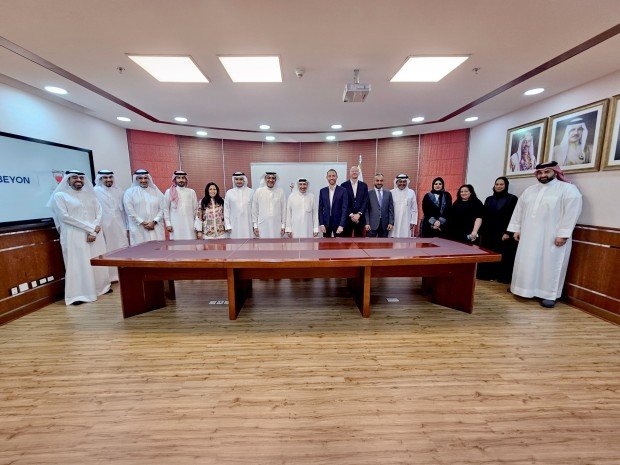







Dubai’s Parkin Company and Bahrain Car Parks Company, known as Amakin, have signed an agreement to explore the integration of their parking platforms, digital payment services and mobility data as they look to expand smart parking services across the GCC.
The memorandum of understanding brings together two established parking operators in the UAE and Bahrain, creating a framework for technology integration as well as potential joint business development in regional and international markets.
A key area under consideration is connecting Parkin and Amakin’s digital platforms to simplify parking access and payments for customers using their respective networks.
UAE-Bahrain parking integration under consideration
Under the proposed model, customers could potentially use the companies’ existing mobile applications to access and pay for parking across both networks.
If implemented, the integration could create a more connected parking experience between Dubai and Bahrain without requiring customers to rely on separate payment processes when moving between the two markets.
The companies have not announced a timeline for implementing the integration, and the MoU remains an exploratory framework rather than a confirmed commercial rollout.
Parkin CEO Mohamed Abdulla Al Ali said the agreement represents an opportunity to extend the company’s technology and operational capabilities beyond its home market.
“Our partnership with Amakin represents a significant milestone in expanding our smart parking capabilities beyond Dubai, bringing together our complementary technologies and digital platforms to deliver a seamless customer experience and unlock future growth opportunities across the GCC and beyond.”
Mobility data could support smarter parking services
Data analytics is another important component of the agreement.
Parkin and Amakin plan to assess how mobility data from their respective operations can be analysed to identify usage patterns and support the development of new data-driven parking services.
Such capabilities could potentially help operators improve space availability information, understand demand patterns and manage parking infrastructure more efficiently.
Amakin CEO Tariq Ali Aljowder said the partnership would focus on practical improvements for customers, including faster payments and more accurate information about parking availability.
Regional expansion also on the table
The agreement extends beyond technology sharing between Dubai and Bahrain.
Parkin and Amakin will also explore joint commercial opportunities elsewhere in the GCC and selected international markets, potentially providing both companies with a platform to expand their smart mobility operations beyond their existing footprints.
For Parkin, the agreement adds to a broader push to take its technology-led parking model outside Dubai. For Amakin, collaboration with a larger regional operator could provide access to additional technology and operating expertise while retaining its knowledge of the Bahraini market.
Why this matters
Parking infrastructure is increasingly becoming part of the wider smart-city technology stack rather than operating as a standalone municipal service.
Integrating apps, digital payments, occupancy information and mobility data can turn parking networks into connected platforms capable of improving traffic management and the customer experience.
The Parkin-Amakin agreement is particularly notable because it introduces a cross-border dimension. If the companies move from exploration to implementation, interoperable parking platforms could provide a model for connecting mobility services across multiple GCC markets rather than requiring separate systems for each city or country.
Editor’s note
The most significant element of the MoU is not simply cooperation between two parking operators, but the possibility of digital interoperability between their networks.
There is no confirmed cross-border payment service yet, so the agreement should not be presented as an existing UAE-Bahrain parking network. However, the proposed integration points towards a potentially broader GCC mobility model in which parking access, payments and data services become increasingly interconnected across national markets.