







Pakistan and Google have signed a memorandum of understanding covering digital skills, artificial intelligence, education, digital payments and government transformation, as the country seeks to build a $30 billion digital economy.
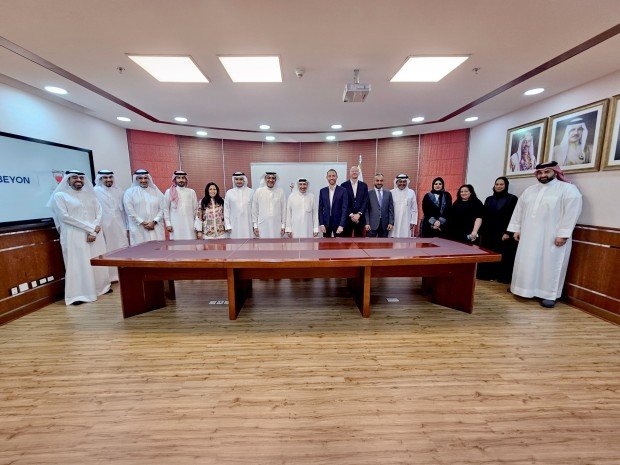
The agreement was signed in Islamabad during a high-level Google delegation visit attended by Prime Minister Shehbaz Sharif and senior government and company officials.
The partnership builds on Google’s recent opening of a local office in Pakistan and sets out a framework for deeper cooperation across skills development, AI adoption and digital public-sector reform.
150,000 Google career certificates planned for 2026
One of the most immediate commitments is an expansion of technical training.
Google plans to issue 150,000 career certificates in Pakistan during 2026, aimed at strengthening employability and digital skills.
The MoU also includes one-year subscriptions to Gemini AI Plus and Gemini Notes for students, giving learners access to generative AI tools for education, research and productivity.
The broader objective is to improve access to digital skills and prepare young people for technology-driven jobs.
AI centre of excellence under consideration
The agreement also includes the possible establishment of an AI centre of excellence in Islamabad.
The two sides will explore how such a facility could support AI skills, research, application development and broader ecosystem growth.
The source does not confirm that the centre has been formally approved or provide a timeline for implementation.
Government departments could adopt more AI and automation
The MoU also covers the use of AI to support digital transformation across government.
One proposed area is the Federal Board of Revenue, where Google technologies could be explored for data analytics and process automation under the prime minister’s FBR transformation plan.
This could include more data-driven decision-making and automation of administrative processes.
The agreement also refers more broadly to the adoption of AI infrastructure and solutions in key sectors.
Digital payments and app development included
The partnership extends beyond AI.
Pakistan and Google will explore ways to improve digital payments and support mobile application and gaming accelerators.
These areas could help strengthen Pakistan’s developer ecosystem and create more opportunities for local technology companies to build export-oriented digital products.
The inclusion of gaming is particularly relevant given Pakistan’s large young population and growing pool of developers and freelancers.
Google links partnership to local office opening
Farhan Qureshi, Google’s cluster director for Pakistan, the Philippines and Thailand, said the agreement builds on the company’s recent establishment of a local office.
“Building on the progress from the recent opening of our office in Pakistan, we are proud to further strengthen our partnership with Pakistan and support its journey towards a $30 billion digital economy,” he said.
The local office gives Google a more formal base for engaging with government, businesses, developers and educational institutions.
Government places youth at centre of digital strategy
Prime Minister Shehbaz Sharif described the agreement as an important milestone in Pakistan’s partnership with Google.
He said the country is undergoing major digital transformation across several areas, including governance, and highlighted the importance of equipping young people with modern tools and technologies.
The government is increasingly positioning skills development as a core part of its digital economy strategy, alongside infrastructure and investment.
MoU signed by Ministry of IT and Google
The agreement was signed by Zarrar Hasham Khan, secretary of the Ministry of Information Technology and Telecommunications, and David Wheeler, Google’s head of public policy for Southeast Asia and South Asia.
The ceremony was also attended by Federal Minister for IT and Telecommunications Shaza Fatima Khawaja, Finance Minister Muhammad Aurangzeb, Google Vice President for Government Affairs and Public Policy Wilson White, US Chargé d’Affaires Natalie Baker and other senior officials.
Why this matters
The MoU is significant because it connects multiple parts of Pakistan’s digital agenda under one partnership.
Skills, AI, digital payments, app development and government automation all contribute to the country’s ambition to expand its technology economy and exports.
The agreement also gives Google a larger role in Pakistan’s digital ecosystem at a time when the company is moving from a largely external presence toward deeper local engagement.
Editor’s note
The key distinction is between commitments already announced and initiatives still under exploration.
The 150,000 career certificates and student access to Gemini represent relatively concrete programmes. By contrast, the AI centre of excellence, government AI deployments and some infrastructure initiatives remain at the evaluation stage.
The long-term impact will depend on whether the MoU translates into deployed projects, stronger digital exports, more skilled workers and measurable improvements in public-sector productivity.