









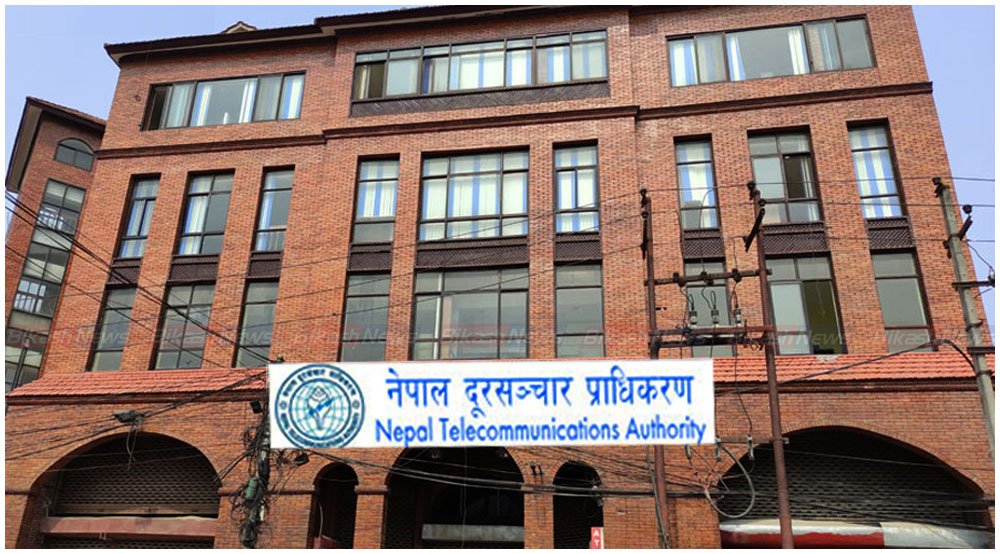
The Nepal Telecommunications Authority has drafted an Integrated Telecommunications Policy 2026 that sets new national targets for broadband speed, affordability, digital literacy and the ICT sector’s contribution to the economy, while proposing updates to licensing, spectrum and infrastructure-sharing rules.
The draft is intended to consolidate existing telecom policies into a single framework and replace targets that have already been achieved with more ambitious goals for the next five and 10 years.
Among the headline objectives, Nepal aims to provide broadband speeds of at least 50 Mbps to 80% of the population within five years and 98% within a decade.
Broadband affordability becomes a formal policy target
The draft introduces explicit affordability thresholds for broadband services.
Within five years, broadband pricing should not exceed 2% of per capita gross national income, falling further to 1.5% within 10 years.
This places affordability alongside coverage as a central policy measure, reflecting the idea that infrastructure expansion alone does not guarantee meaningful digital access.
The targets could also increase pressure on operators and policymakers to improve network economics as faster broadband becomes more widely available.
ICT contribution to GDP targeted at 7% within a decade
The proposed policy also sets economic targets for the technology sector.
Nepal wants ICT to contribute 4% of GDP within five years and 7% within 10 years.
Achieving that would require growth not only in telecom services, but also across software, digital platforms, cloud, outsourcing, enterprise technology and other ICT-related activities.
The framework therefore connects network development more directly with broader digital economic growth.
Digital literacy target rises to 85%
The policy also sets targets for digital literacy.
Nepal aims to increase digital literacy to 60% of the population within five years and 85% within a decade.
That suggests the government is treating skills development as a necessary complement to infrastructure and affordability.
Expanding access to broadband will have a larger economic and social impact if users also have the capability to use digital services effectively and safely.
Licensing and spectrum rules could be updated
The draft proposes reforms across several parts of the telecom regulatory framework.
These include updates to licensing, spectrum management, licence renewal fees and foreign investment rules.
It also proposes provisions covering infrastructure sharing, mobile number portability and anti-competitive practices.
Taken together, these measures point toward a broader attempt to modernise the structure of Nepal’s telecom market rather than simply expand coverage.
5G, fibre, FWA and satellite included in technology roadmap
The policy encourages commercial adoption of several emerging and next-generation technologies.
These include 5G, fibre networks, Fixed Wireless Access, Internet of Things services, satellite communications and High Altitude Platform Stations.
This creates a technology-neutral framework in which multiple access technologies could be used to extend connectivity, particularly in difficult terrain.
For Nepal, satellite and high-altitude systems may be especially relevant in mountainous and remote areas where conventional terrestrial deployment can be expensive or technically challenging.
Innovation Hub proposed for workforce development
The draft also proposes the creation of an Innovation Hub or Centre of Excellence.
The facility would support workforce development and help build skills around emerging technologies and telecom innovation.
That could become increasingly important as the sector moves toward more software-driven networks, AI-enabled operations, 5G, IoT and advanced digital services.
Cybersecurity and resilience requirements strengthened
The policy includes stronger provisions for cybersecurity, data protection and emergency communications.
It also calls for more disaster-resistant telecom infrastructure.
These requirements are particularly important in Nepal, where natural disasters can disrupt physical networks and isolate communities.
The framework therefore treats resilience as a core element of national connectivity policy rather than a separate operational issue.
Minister-led committee would oversee implementation
Implementation of the policy would be overseen by a directive committee chaired by the communications minister.
That governance structure is intended to coordinate execution across regulators, government agencies and industry stakeholders.
As the document remains a draft, the targets and proposed regulatory changes are not yet final policy.
Why this matters
The draft represents a shift from basic connectivity expansion toward a more comprehensive digital infrastructure strategy.
Nepal is setting measurable targets not just for coverage, but also speed, price, skills and economic contribution.
The combination of 50 Mbps broadband targets, affordability thresholds and support for 5G, fibre, FWA and satellite services suggests the country is trying to build a more flexible and future-oriented telecom framework.
Editor’s note
The most significant aspect of the draft is its attempt to connect telecom regulation with economic outcomes.
Coverage targets are important, but the policy goes further by linking broadband affordability, digital literacy and ICT’s contribution to GDP.
The challenge will be execution. Reaching 98% of the population with at least 50 Mbps broadband in a mountainous country will require not only investment, but also effective spectrum policy, infrastructure sharing, backhaul expansion and the use of alternative technologies where conventional mobile or fibre networks are difficult to deploy.