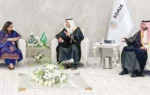




Nokia has opened its first dedicated research and development centre in Saudi Arabia, establishing a Riyadh-based operation focused on AI-powered network automation, energy efficiency and future 6G technologies that could eventually be deployed by customers globally.
Opened on September 1, 2026, the centre forms part of Nokia’s cooperation with Saudi Arabia’s Ministry of Communications and Information Technology and represents a shift towards conducting telecom technology development within the Kingdom.
The facility will develop software for increasingly autonomous telecommunications networks while building local capabilities in AI, software engineering and network automation.
AI to drive more autonomous telecom networks
A central focus of the Riyadh centre will be developing AI-based software capable of automating network management and reducing the level of manual intervention required from operators.
Research and development will cover areas including service management and orchestration, self-organising networks, Autopilot technologies and rApps.
These technologies are intended to enable networks to perform functions such as adjusting configurations, identifying and responding to problems and continuously optimising performance based on changing operating conditions.
The wider objective is to move telecom infrastructure towards networks that can increasingly configure, optimise and, in some cases, heal themselves.
Nokia targets lower network energy consumption
Energy efficiency will form another major component of the centre’s work.
According to comments from Nokia’s regional leadership reported by Asharq Bloomberg, the company is targeting reductions of around 10% to 15% in network energy bills through technologies being developed around automation and optimisation.
Nokia is also working on technologies intended to reduce the space and energy requirements of telecommunications facilities by around 30%.
Such improvements could become increasingly important as operators deploy denser networks and accommodate rising data traffic and AI-related workloads.
AI-driven network management can potentially reduce unnecessary energy consumption by dynamically adjusting infrastructure according to traffic and operating requirements.
Riyadh teams to contribute to AI-native 6G research
The centre will also extend its research beyond existing mobile networks into AI-native 6G technologies.
Nokia plans to involve its Saudi-based teams in developing technologies relevant to the next generation of communications infrastructure.
The inclusion of 6G gives the facility a longer-term research role, although the announcement does not represent a commercial 6G deployment.
Instead, the centre will allow researchers and engineers in Saudi Arabia to participate in Nokia’s wider development work as the telecom industry explores architectures in which AI is expected to become more deeply embedded into network design and operation.
Saudi-developed technologies could reach global customers
Nokia intends for the Riyadh centre to develop solutions for Saudi operators and enterprises while also contributing technologies that could eventually be offered to customers internationally.
This gives the facility a broader mandate than simply adapting Nokia products for the domestic market.
The company is positioning some of the technologies developed through the centre as “Made in Saudi Arabia,” aligning with the Kingdom’s efforts to increase local technology development and create exportable intellectual property.
If successful, the model could move Saudi Arabia further up the telecom technology value chain from being primarily a major buyer and deployer of communications infrastructure towards becoming a location where parts of that technology are designed and developed.
Saudi talent development forms part of R&D strategy
Building local technical expertise is another component of the initiative.
Nokia plans to create opportunities across engineering and R&D while providing training programmes, bootcamps and specialised certifications covering AI and automation.
The approach is intended to combine Nokia’s international telecommunications expertise with Saudi engineering and technology talent.
Saudi Arabia has increasingly emphasised skills development alongside investment in AI, cloud, data centres and telecommunications infrastructure as it seeks to build a larger domestic technology industry under Vision 2030.
The Ministry of Communications and Information Technology said the centre supports efforts to localise advanced R&D capabilities, develop national expertise in AI and software and create technologies capable of serving international markets.
stc Hajj trial provides real-world testing environment
Nokia’s work on network automation also builds on experience with Saudi telecom operators.
The company cited work conducted with stc during the 2026 Hajj season as an example of testing technologies under demanding real-world network conditions.
Major events such as Hajj create unusual telecommunications requirements because operators must manage sharp changes in traffic and extremely high concentrations of users within specific locations.
Such environments can provide practical testing grounds for technologies designed to improve network efficiency, energy consumption and user experience before wider deployment.
Launch coincides with LEAP 2026
The opening comes during LEAP 2026 in Riyadh, where Nokia is showcasing technologies spanning standalone mobile networks, AI-enabled network operations, data centres and communications infrastructure.
The company’s participation centres on the role of connectivity as AI adoption increases.
For telecom operators, that relationship works in both directions. Networks must provide the connectivity required by increasingly data-intensive AI services, while AI itself is becoming a tool for managing the growing complexity of those networks.
Why this matters
Nokia’s first Saudi R&D centre represents a more significant form of technology localisation than establishing a sales office or expanding local deployment operations.
The centre is intended to participate directly in product and software development, with Saudi-based teams contributing technologies that could eventually be deployed internationally.
Its focus on autonomous networks is also strategically relevant. As 5G networks become more complex and operators begin preparing for 6G, manually managing every configuration, fault and optimisation decision becomes increasingly impractical. AI-driven automation is therefore moving closer to the core of network operations.
For Saudi Arabia, developing these capabilities locally could support both telecom modernisation and the broader objective of building domestic expertise in advanced software and AI.
Editor’s note
The most important aspect of Nokia’s Riyadh centre is not the reference to 6G, but the localisation of actual telecom R&D.
Saudi Arabia has already established itself as a major market for advanced communications infrastructure. The next step is capturing more of the engineering, software development and intellectual property associated with that infrastructure.
The centre will be worth watching for measurable outputs: Saudi-developed products, patents or software, locally recruited engineering teams, commercial deployments and technologies exported to Nokia customers elsewhere. If those outcomes materialise, the facility could provide a useful indicator that the Kingdom’s technology localisation strategy is progressing from attracting global vendors towards participating directly in the development of their technologies.