






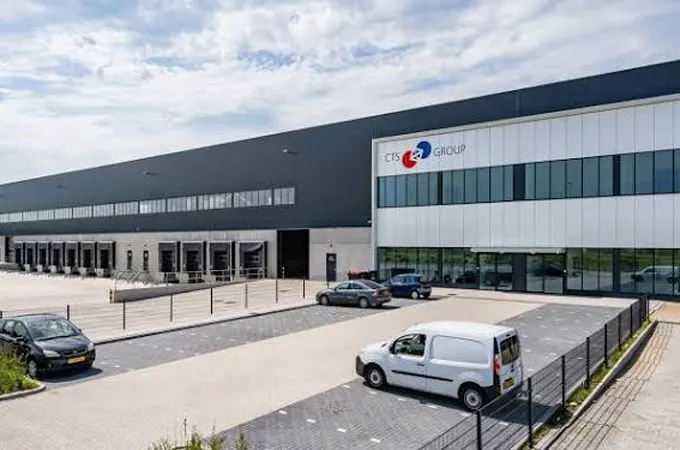
Switzerland-based CTS Group and Saudi clean energy and smart infrastructure company Desert Technologies have formed a new joint venture, CTS-DT, to develop AI-optimised data centre infrastructure in Saudi Arabia, with an initial annual capacity target of 300 MW and plans to scale to 1.2 GW per year.
The partnership was announced on the sidelines of LEAP 2026 in Riyadh and will focus on the design, development, construction and manufacturing of data centre solutions for artificial intelligence and high-performance computing workloads.
The agreement was signed by Desert Technologies CEO Khalid Ahmed Sharbatly and CTS Group CEO Philippe Schelfhout.
Joint venture targets 1.2 GW annual capacity
CTS-DT will initially target 300 MW of annual capacity in Saudi Arabia before gradually scaling to 1.2 GW per year.
The company plans to establish an industrial and technology platform in the Kingdom to serve rising demand for AI computing infrastructure and broader digital infrastructure.
Its initial scope will include the design, development and construction of large-scale AI data centres, supported by local manufacturing and engineering capabilities.
The planned infrastructure will be designed around the performance, reliability, flexibility and energy-efficiency requirements associated with AI and high-performance computing.
Saudi Arabia to serve as regional expansion base
The joint venture also plans to use Saudi Arabia as a base for expansion into Middle Eastern and African markets.
That gives the project a broader regional ambition beyond domestic data centre demand.
Desert Technologies said the partnership is intended not only to support Saudi AI infrastructure requirements, but also to contribute to the development, localisation and eventual export of data centre technologies and infrastructure from the Kingdom.
The source did not disclose project locations, investment values, construction timelines or the specific number of data centre sites planned.
Local manufacturing forms core part of strategy
A significant element of the partnership is its focus on localisation.
CTS-DT plans to build advanced manufacturing and engineering capabilities in Saudi Arabia, while developing national expertise in areas supporting data centre construction and the wider digital economy.
This could include transferring technical knowledge associated with data centre design, modular infrastructure, power systems, cooling and other supporting technologies, although the companies did not specify which components will be manufactured locally.
The localisation strategy aligns with Saudi Arabia’s broader efforts to attract technology investment and build domestic industrial capabilities around strategic digital infrastructure.
AI workloads drive infrastructure requirements
AI data centres differ from conventional enterprise facilities because they often need much higher power density, more advanced cooling systems and specialised infrastructure capable of supporting large GPU and accelerator clusters.
CTS-DT said its planned facilities will be optimised specifically for artificial intelligence and high-performance computing applications.
Energy efficiency is likely to be a particularly important consideration as AI infrastructure expands, given the significant electricity and cooling requirements associated with large-scale computing clusters.
Desert Technologies’ existing focus on clean energy and smart infrastructure could therefore complement CTS Group’s data centre engineering expertise.
Partnership supports Vision 2030 ambitions
Desert Technologies said the initiative forms part of its strategy to expand into digital infrastructure.
The company also linked the joint venture to Saudi Vision 2030 objectives around digital economy growth, technology localisation, investment attraction and positioning the Kingdom as a regional hub for artificial intelligence.
Sharbatly said the ambition extends beyond meeting domestic demand and includes building infrastructure capabilities that could eventually serve regional and international markets.
CTS Group, meanwhile, described Saudi Arabia as a key component of its regional growth strategy.
Why this matters
The scale of the CTS-DT target makes the partnership notable within Saudi Arabia’s rapidly expanding AI infrastructure market.
An initial 300 MW annual capacity is already significant, while a pathway toward 1.2 GW per year would position the venture around hyperscale levels of infrastructure development if those targets are realised.
The localisation element is equally important. Saudi Arabia is not only trying to attract data centre capacity, but increasingly to build domestic capabilities around the engineering, manufacturing and operation of AI infrastructure.
Editor’s note
The most strategically important part of this announcement is the combination of scale and localisation.
Many AI infrastructure projects in the region focus primarily on adding computing capacity. CTS-DT is also proposing to build an industrial platform around that capacity, potentially giving Saudi Arabia a role in manufacturing and engineering parts of the data centre value chain.
The next milestones to watch will be specific project sites, secured power capacity, investment commitments, customer agreements and evidence that local manufacturing actually moves from ambition into production. Those factors will determine whether CTS-DT becomes a major regional AI infrastructure platform or remains primarily a development framework.