





The United Nations Economic and Social Commission for Western Asia and Morocco have signed a Memorandum of Understanding to strengthen regional cooperation on digital governance and public administration reform across the Arab region.
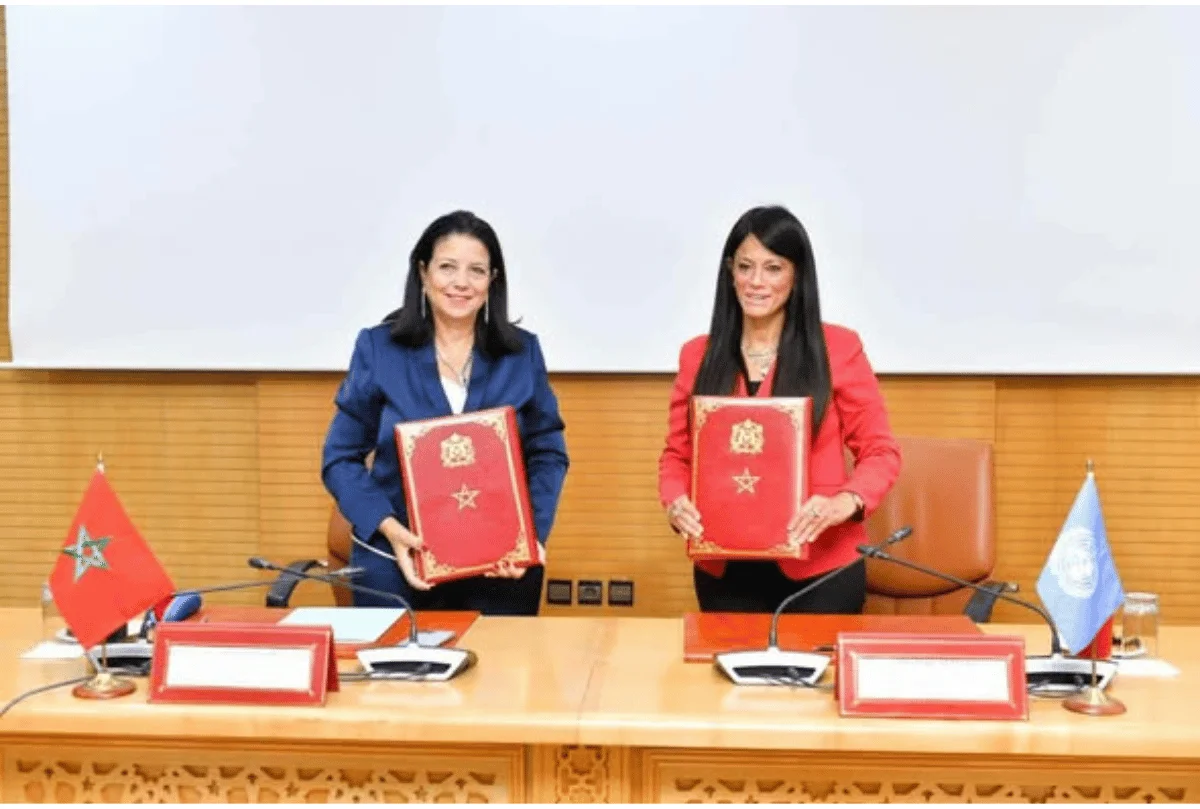
The agreement was signed in Rabat by UN Under-Secretary-General and ESCWA Executive Secretary Rania Al-Mashat and Morocco’s Minister Delegate in charge of Digital Transition and Administrative Reform, Amal El Fallah Seghani.
The partnership establishes a framework for sharing expertise, modernising public administration and expanding the use of emerging technologies to improve government services.
Agreement targets public administration modernisation
The MoU focuses on strengthening digital governance and helping public institutions improve efficiency, accessibility and service quality.
ESCWA and Morocco will work together on administrative innovation and institutional reform, with the aim of supporting more effective public-sector operations across ESCWA member states.
The initiative is also intended to encourage the use of emerging technologies in government while improving how public services are designed and delivered.
Morocco to share digital transformation experience
A central element of the agreement is the exchange of best practices.
Morocco has been advancing its own digital transition and administrative reform agenda, and the partnership creates a mechanism through which those experiences can be shared more widely across the Arab region.
The cooperation could cover institutional models, service digitisation approaches and methods for improving interaction between citizens and government entities.
Specific programmes, implementation timelines and funding arrangements were not disclosed.
ESCWA expands regional digital cooperation role
ESCWA has increasingly focused on digital transformation as part of its wider economic and social development mandate.
Through the agreement, the organisation will work with Morocco to support administrative modernisation and promote digital governance practices across member states.
The partnership also connects digital reform with broader sustainable development objectives, particularly where technology can improve access to public services and strengthen institutional capacity.
Emerging technologies form part of reform agenda
The MoU explicitly highlights the use of emerging technologies and innovative institutional strategies.
While the agreement does not specify individual technologies or platforms, the broader direction suggests greater use of digital tools to improve public-sector efficiency and service delivery.
The effectiveness of such initiatives will depend on how individual governments translate shared frameworks and best practices into practical reforms.
Why this matters
Digital government across the Arab region is advancing at different speeds, and one of the persistent challenges is transferring successful models between countries.
The ESCWA-Morocco agreement creates a formal mechanism for doing that.
Morocco’s role is particularly relevant because the partnership is not limited to domestic reform. It positions the country as a contributor to regional public-sector modernisation and knowledge exchange.
Editor’s note
The strategic value of this MoU will depend on whether it moves beyond dialogue into repeatable programmes that can be adopted across multiple countries.
Regional digital governance initiatives can be useful when they reduce duplication, spread proven administrative models and help governments avoid rebuilding the same capabilities independently.
The next indicators to watch will be concrete pilot projects, shared frameworks, technical assistance programmes and measurable improvements in public service delivery across participating ESCWA member states.