





Egypt is discussing plans for an integrated hyperscale data centre and artificial intelligence zone with Heka Data and a US alliance of data centre developers, as the government seeks to attract investment, expand cloud infrastructure and strengthen the country’s position as a regional digital hub.
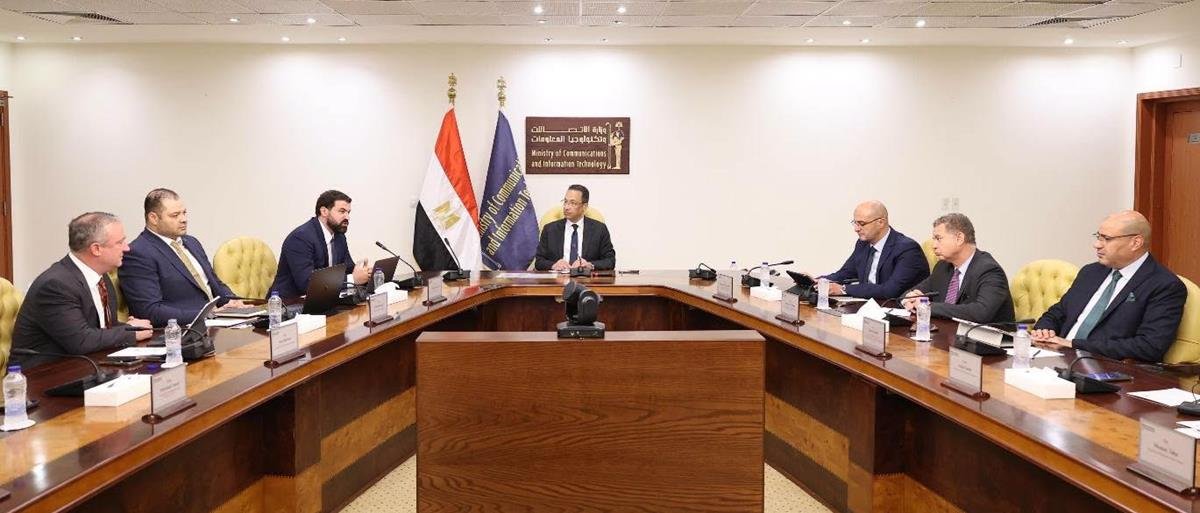
The plans were discussed during a meeting on September 3 between Communications and Information Technology Minister Raafat Hindi and a delegation led by Heka Data Chairman Ahmed el-Hefny.
The talks focused on the project’s initial concept, potential scale, implementation phases and investment requirements, as well as the infrastructure and regulatory conditions needed to support development.
Project would target hyperscale and AI infrastructure
Heka Data and the US alliance presented a vision for establishing an integrated zone in Egypt focused on hyperscale data centres and artificial intelligence infrastructure.
The proposed development is intended to serve demand from Egypt as well as regional and international markets.
Discussions covered opportunities around cloud computing, AI workloads and digital services, alongside the potential for the project to create jobs and attract additional technology investment.
No final investment value, capacity, site, construction timetable or development agreement has been announced.
The parties are currently moving ahead with studies and procedures required to assess the project.
Egypt highlights connectivity advantages
The government is positioning Egypt’s geographic location and international connectivity as key advantages for attracting large-scale data centre investment.
Officials highlighted the country’s fibre-optic infrastructure and submarine cable connections linking it with markets across different regions.
These assets could support data centre operators seeking high-capacity international connectivity and lower-latency access between Africa, the Middle East, Europe and other markets.
Egypt also pointed to its growing base of ICT professionals as another factor supporting expansion of cloud and data infrastructure.
Government seeks technology localisation
Hindi said Egypt is looking to deepen international partnerships with companies and institutions specialising in data centres and digital infrastructure.
He said targeted investments should contribute not only capital, but also technology transfer and localisation.
The government’s wider objective is to build an integrated ecosystem capable of supporting data centres, AI and advanced digital services rather than attracting isolated infrastructure projects.
The minister said stronger data centre capabilities could improve the competitiveness of Egypt’s economy and attract additional technology investment.
AI demand increases pressure on digital infrastructure
The talks also reflected the growing infrastructure requirements created by artificial intelligence.
As AI models and cloud applications expand, operators require greater computing density, storage, connectivity and power availability.
Hindi said Egypt is working to create an environment capable of accommodating this growth while increasing the country’s ability to host and process data for companies and institutions in Egypt and the wider region.
The government views data centres as a core component of its broader digital economy and as essential infrastructure for cloud computing and AI.
Energy requirements form part of discussions
The meeting also examined the relationship between digital infrastructure and the energy required to operate data centres.
Large-scale and AI-focused facilities can place significant demands on power systems, making access to reliable and efficient energy an important part of development planning.
Officials discussed the need to integrate data centre infrastructure with appropriate energy sources to support continuity and efficiency as global demand for compute capacity rises.
Regulators and Telecom Egypt involved in talks
The meeting included senior officials from several of Egypt’s key digital and telecommunications institutions.
Participants included National Telecommunications Regulatory Authority CEO Mohamed Shamroukh, Information Technology Industry Development Agency CEO Ahmed el-Zaher, and representatives from Telecom Egypt and the Ministry of Communications and Information Technology.
Their involvement suggests that any large-scale development would require coordination across telecommunications regulation, investment facilitation, connectivity and infrastructure planning.
Why this matters
Egypt already has a strategic connectivity advantage because of its position on major international submarine cable routes, but converting that position into a larger domestic data centre industry requires investment in computing infrastructure, energy capacity and cloud ecosystems.
A hyperscale and AI-focused development could help Egypt capture more value from the data traffic that already passes through or near the country.
It could also strengthen local cloud capacity and provide infrastructure for AI workloads serving North Africa, the Middle East and potentially European markets.
Editor’s note
The opportunity is significant, but the project remains at an exploratory stage.
The meeting covered concepts, studies, procedures and potential implementation phases rather than a confirmed investment or construction programme. The key milestones will therefore be site selection, power allocation, committed capacity, financing and a formal development timetable.
Egypt’s connectivity gives it a strong foundation, but hyperscale data centres increasingly depend just as much on reliable energy, permitting, operational resilience and access to high-density computing infrastructure. Whether Heka Data’s proposal advances will depend on how effectively those elements can be brought together into a commercially viable project.