

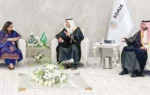



King Abdulaziz City for Science and Technology has signed a research collaboration agreement with quantum computing company Pasqal to develop and validate quantum-safe cryptographic technologies, expanding Saudi Arabia’s efforts to build domestic capabilities across quantum research, cybersecurity and computing infrastructure.
The agreement, led by KACST’s National Center for Quantum Technologies, was announced at King Salman Science Oasis in Riyadh during World Quantum Day.
Quantum cryptography will be the first focus of a broader multi-year research programme combining Pasqal’s neutral-atom quantum computing technology and cloud services with KACST’s national research infrastructure.
Quantum-safe cryptography becomes initial research focus
KACST and Pasqal plan to develop, test and package cryptographic technologies designed to remain secure as quantum computing capabilities advance.
Research will be conducted through the National Center for Quantum Technologies, with the partners ultimately seeking to develop solutions that could be commercialised in the Saudi market.
The work addresses growing concerns that sufficiently capable quantum computers could eventually undermine some of the cryptographic methods currently used to secure digital communications and information systems.
This has increased pressure on governments, financial institutions and critical infrastructure operators to prepare their systems for a post-quantum environment before cryptographically relevant quantum computers become available.
Pasqal brings neutral-atom quantum computing technology
Pasqal specialises in quantum computers based on neutral atoms, using individual atoms as quantum bits, or qubits.
Under the collaboration, its quantum processing technology and cloud services will be combined with KACST’s research infrastructure to support joint research and validation.
While quantum cryptography represents the initial focus, the agreement is intended to support research across multiple quantum technology domains over several years.
KACST Senior Vice President for R&D Talal Al-Sedairy said the partnership is intended to strengthen national capabilities while translating quantum research into future applications.
National Center for Quantum Technologies Director Manahel Thabet said the collaboration would allow Saudi researchers to conduct joint research using international expertise and advanced infrastructure.
Partnership builds on Saudi Arabia’s first quantum computer
The agreement follows a series of Pasqal investments and partnerships in Saudi Arabia.
In May 2026, Pasqal and Aramco inaugurated what they described as Saudi Arabia’s first quantum computer at Aramco’s data centre in Dhahran.
The deployment was accompanied by the launch of what Pasqal described as the Middle East’s first commercial Quantum Computing-as-a-Service platform.
That infrastructure gives organisations a mechanism to access quantum computing capabilities without necessarily operating their own quantum hardware.
Pasqal has also announced plans with Eleven Ventures to establish a joint venture focused on deploying, commercialising and scaling quantum computing systems across Saudi Arabia and the wider Middle East and North Africa.
Saudi Arabia builds wider quantum ecosystem
The KACST agreement adds a research and cybersecurity dimension to a Saudi quantum ecosystem that is beginning to span hardware, cloud access, research and commercialisation.
Pasqal’s engagement with the Kingdom has also included a visit by a Saudi ministerial delegation led by Communications and Information Technology Minister Abdullah Alswaha to the company’s headquarters and quantum computer production facility in France.
The company said its strategy in Saudi Arabia extends beyond hardware deployment towards developing practical applications, partnerships and local capabilities.
Pasqal CEO Wasiq Bokhari is also participating at LEAP 2026 in Riyadh, where the company is highlighting the potential transition of quantum computing from scientific research towards industrial applications.
Quantum security adds urgency to cybersecurity planning
The cryptography component of the KACST partnership could have more immediate relevance than many experimental quantum computing applications.
Governments and enterprises increasingly need to assess which systems depend on cryptographic technologies that could become vulnerable to future quantum computers.
Because critical infrastructure and government systems can remain operational for many years, migration towards quantum-resistant security can require substantial preparation well before the underlying threat becomes practical.
For Saudi Arabia, developing domestic research capabilities could therefore support longer-term cybersecurity readiness across government, financial services and critical infrastructure.
Why this matters
Saudi Arabia’s quantum strategy is beginning to develop across several layers rather than focusing on a single research programme.
The Kingdom now has locally deployed quantum computing infrastructure through the Pasqal-Aramco project, commercial cloud access to quantum resources, emerging commercialisation initiatives and a dedicated research collaboration with KACST.
Making quantum-safe cryptography the first focus of the new partnership is particularly significant because it connects experimental computing research with a practical cybersecurity challenge.
If the programme produces technologies that can be tested and commercialised locally, Saudi Arabia could begin building domestic intellectual property and expertise around quantum security rather than relying entirely on imported solutions.
Editor’s note
Quantum computing remains an emerging technology, and the commercial impact of many applications is still uncertain. Quantum readiness, however, is becoming a more immediate strategic issue because cryptographic migration can take years.
That makes the KACST-Pasqal agreement more consequential than another exploratory quantum research announcement.
The milestones to watch will be specific cryptographic solutions developed through the programme, testing with Saudi government or critical infrastructure environments, commercial products emerging from the research and the development of local quantum expertise. Together with the Aramco deployment and planned commercialisation initiatives, those outcomes would indicate whether Saudi Arabia is progressing from acquiring quantum technology towards building a sustainable domestic quantum ecosystem.