







Chinese autonomous driving companies are accelerating their global expansion by using the Middle East as a launchpad for large-scale robotaxi deployments, supported by favourable regulations and strong government backing for clean energy and smart mobility. In cities such as Abu Dhabi and Dubai, Chinese developers are already moving from pilots to early commercial operations, positioning the region as a critical testing ground for driverless transport.
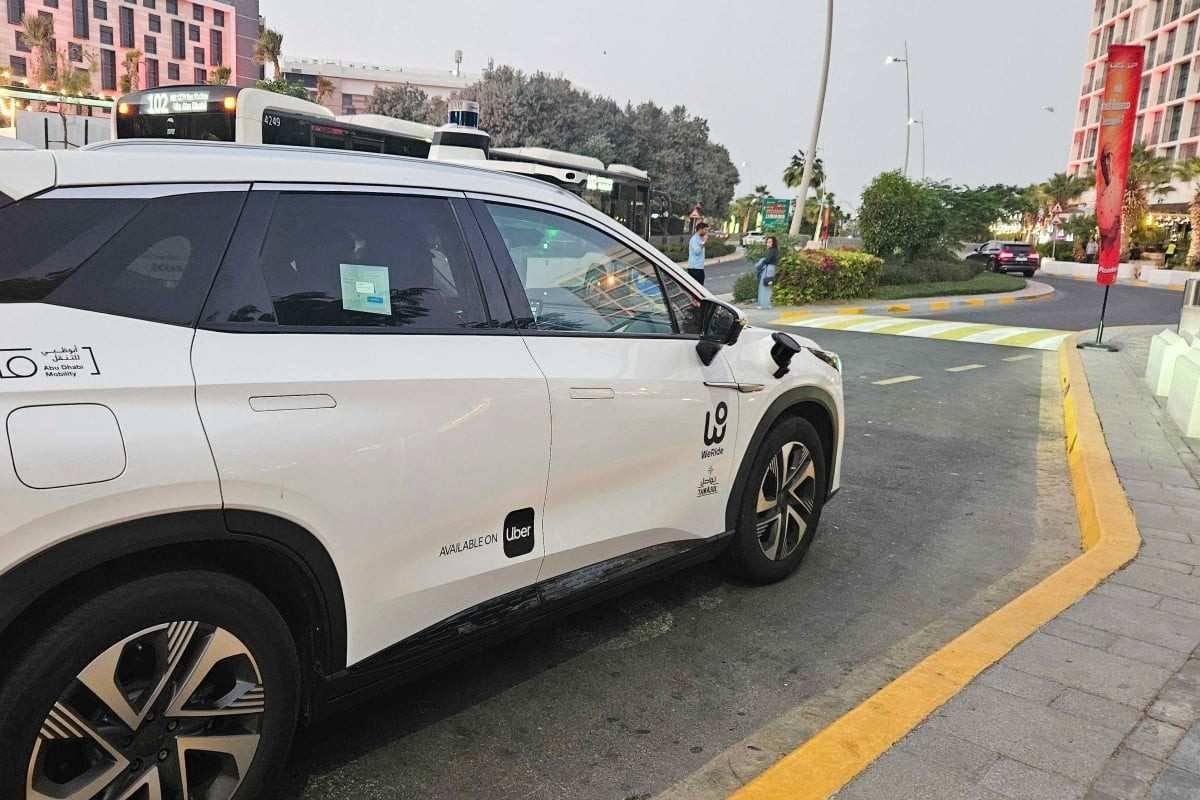
In Abu Dhabi, ride-hailing users can now select “autonomous” vehicles on Uber in designated areas, reflecting the UAE’s push to reduce reliance on oil and gas while advancing next-generation transport. Companies including WeRide, Baidu, Pony.ai and CaoCao have entered the market, with WeRide and Baidu’s Apollo Go securing permits for fully driverless operations and Pony.ai beginning pilot testing in Dubai.
WeRide launched commercial robotaxi services on Yas Island in November 2025 and reported an average of 15 daily orders per vehicle. While fleet density remains limited compared with mature deployments in Chinese cities such as Wuhan, expansion plans are aggressive. WeRide said it operated around 200 self-driving vehicles across the Middle East by the end of 2025 and aims to scale to 1,000 vehicles by 2026, with broader coverage across Abu Dhabi and commercial launches in Dubai expected in early 2026.
Baidu has also outlined ambitious plans, targeting hundreds of fully driverless vehicles in Abu Dhabi by 2026 and more than 1,000 by 2028 through its partnership with UAE-based AutoGo. Pony.ai, which already operates pre-commercial services in the UAE, Qatar and Saudi Arabia, plans to launch fully driverless commercial services in Dubai in 2026 and reach a fleet of 1,000 robotaxis across the Middle East by 2028.
The Middle East is emerging as one of the world’s most competitive environments for autonomous driving, offering regulatory flexibility and real-world deployment opportunities that are increasingly difficult to access in the US due to geopolitical restrictions on Chinese technology. While Western players such as Waymo remain focused on domestic markets, Chinese firms are leveraging the region’s openness to accelerate international growth and refine large-scale operations.
As governments across the Gulf invest in smart cities, sustainability and future mobility, Chinese robotaxi developers are positioning themselves at the centre of the region’s transition toward autonomous transport, with 2026 expected to mark a significant acceleration in driverless services.