








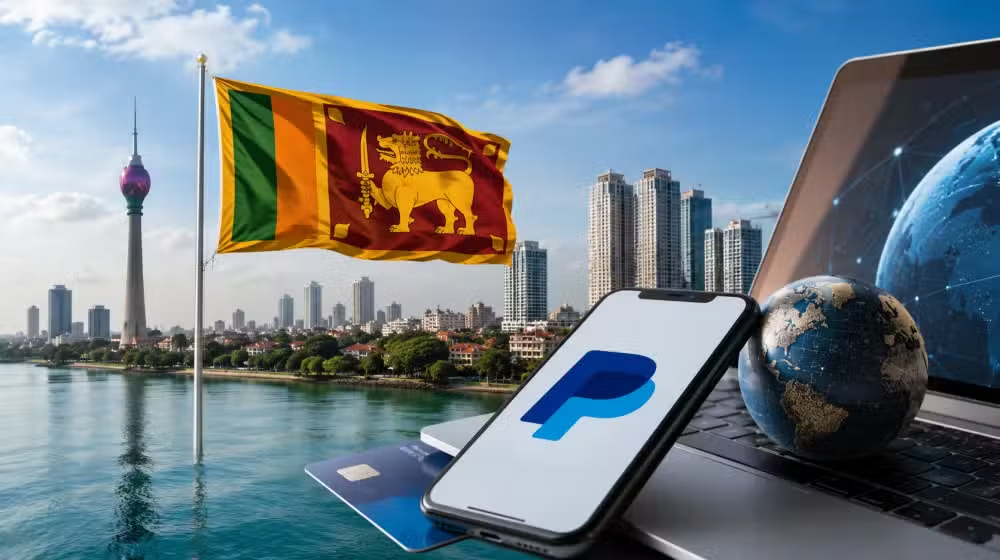
PayPal has expanded operations into another small South Asian market, drawing renewed attention to Pakistan’s continued absence from major global digital payment ecosystems despite the country’s rapidly growing digital economy and freelance workforce.
The development has reignited discussions around Pakistan’s international payment infrastructure challenges, particularly for freelancers, exporters, startups, and digital service providers that rely on cross-border transactions.
Pakistan remains one of the largest freelance and digital services markets in the region, yet users continue facing operational limitations when accessing international payment platforms and global financial ecosystems.
International Payment Access Remains a Major Challenge
The lack of direct PayPal availability in Pakistan has long been viewed as a structural limitation for the country’s digital economy.
Freelancers, IT exporters, e-commerce sellers, and remote workers often depend on alternative payment solutions, intermediary platforms, or third-party arrangements to receive international payments.
Industry stakeholders have repeatedly argued that limited access to global payment infrastructure affects business efficiency, increases transaction friction, and reduces competitiveness for Pakistan’s digital workforce.
Cross-border payment accessibility has become increasingly important as digital services exports, online commerce, and remote work opportunities continue expanding globally.
Digital Economies Increasingly Depend on Global Financial Integration
Emerging digital economies are becoming more reliant on integrated payment infrastructure capable of supporting international commerce, platform participation, and seamless financial transactions.
Countries across South Asia are steadily modernizing fintech ecosystems, digital banking infrastructure, and payment regulations to attract global financial technology providers and support digital trade.
Pakistan has made progress in expanding digital payments, fintech innovation, and branchless banking adoption domestically, but international payment integration remains a key unresolved issue for many users.
The country’s large youth population and expanding freelance sector continue creating strong demand for globally interoperable digital financial services.
Fintech Infrastructure Becoming Strategically Important
Access to international payment systems is increasingly viewed as critical infrastructure for modern digital economies.
Reliable cross-border payment channels support export growth, entrepreneurship, startup ecosystems, digital employment, and participation in global online platforms.
The continued absence of globally dominant payment providers in certain emerging markets highlights wider challenges around regulatory alignment, compliance frameworks, financial risk assessment, and infrastructure readiness.
Editor’s Note
Cross-border payment access is becoming a defining factor in digital economy competitiveness. As remote work, freelancing, e-commerce, and digital exports continue growing globally, countries without seamless international payment integration risk limiting the full economic potential of their digital workforce and online business ecosystems.