








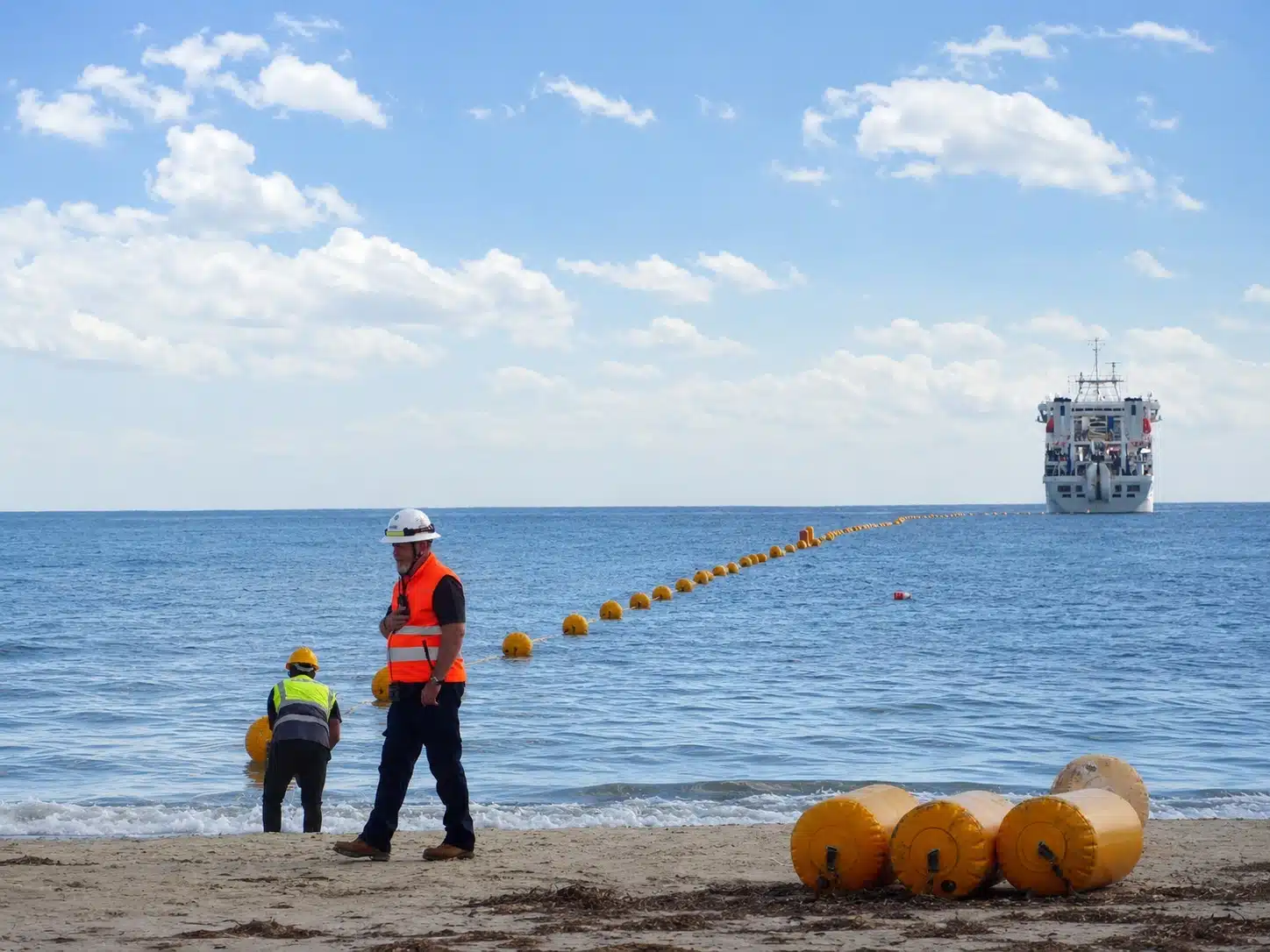
Tunisia has officially connected to the Medusa subsea cable system, a development that strengthens the country’s international telecommunications infrastructure and enhances its position within the Mediterranean’s growing digital connectivity network.
The activation of the cable marks a significant milestone for Tunisia’s digital infrastructure ambitions, providing additional international bandwidth capacity and creating new opportunities to improve connectivity between North Africa and Europe. As data traffic continues to surge and digital services become increasingly dependent on high-capacity international networks, investments in subsea cable infrastructure are becoming critical to national digital transformation strategies.
The Medusa system is one of the Mediterranean region’s most significant connectivity projects, designed to create a high-capacity fiber network linking countries across North Africa and Southern Europe. The cable is expected to support rising demand for internet services, cloud computing, digital content delivery, enterprise connectivity, and emerging AI-driven workloads.
For Tunisia, the new connection strengthens international network resilience while expanding access to global digital infrastructure. Additional international routes can help reduce congestion, improve service reliability, and support growing demand from businesses, government institutions, technology companies, and consumers.
Subsea cables form the backbone of the global internet, carrying the vast majority of international data traffic. Despite their critical role in the digital economy, these networks often receive less attention than visible infrastructure such as data centers or mobile networks. Yet their importance continues to grow as economies become increasingly dependent on digital services and cross-border data flows.
The Medusa connection arrives at a time when Tunisia is seeking to expand its digital economy and attract greater investment in technology-enabled industries. Reliable international connectivity is an important factor for sectors such as business process outsourcing, cloud services, fintech, software development, digital media, and technology startups.
The development also supports broader regional connectivity objectives. North African countries are investing heavily in telecommunications infrastructure to improve digital competitiveness and strengthen links with global markets. Enhanced international connectivity can facilitate trade, innovation, and collaboration while supporting digital transformation initiatives across multiple sectors.
In addition to increasing bandwidth capacity, modern subsea cable systems play an increasingly important role in supporting cloud adoption and AI deployment. Data-intensive applications require low-latency, high-capacity international networks capable of handling growing volumes of traffic between regional markets and global cloud platforms.
As demand for digital services continues to accelerate, investments in international connectivity infrastructure are becoming a strategic priority for countries seeking to strengthen their role in the global digital economy.
Editor’s Note
The activation of the Medusa cable connection is significant because it highlights a fundamental reality of the digital economy: international connectivity has become a strategic national asset.
Much of the discussion around digital transformation focuses on artificial intelligence, cloud computing, fintech, and digital government services. However, all of these technologies ultimately depend on the availability of robust international telecommunications infrastructure. Without sufficient connectivity capacity, digital ambitions can quickly encounter performance, reliability, and scalability constraints.
For Tunisia, the Medusa connection represents more than a telecommunications upgrade. It strengthens the country’s digital competitiveness by improving access to global networks and reducing dependence on limited international connectivity routes. This becomes increasingly important as businesses migrate to cloud environments and rely more heavily on international data exchanges.
The development also reflects a wider trend across North Africa and the Mediterranean. Countries are increasingly competing not only on the basis of domestic infrastructure but also on their ability to connect efficiently to global digital ecosystems. Subsea cables, internet exchange points, and data centers are emerging as critical components of national digital infrastructure strategies.
From a digital sovereignty perspective, greater connectivity diversity improves resilience. Multiple international routes reduce the risks associated with outages, congestion, or disruptions affecting a single connection point. This is particularly important as governments and enterprises become more dependent on digital services for critical operations.
The broader implication is that subsea cable infrastructure is becoming as strategically important to modern economies as ports, highways, and energy networks. As artificial intelligence, cloud computing, and data-intensive applications continue to expand, countries with strong international connectivity foundations will be better positioned to attract investment, support innovation, and participate more effectively in the global digital economy.