





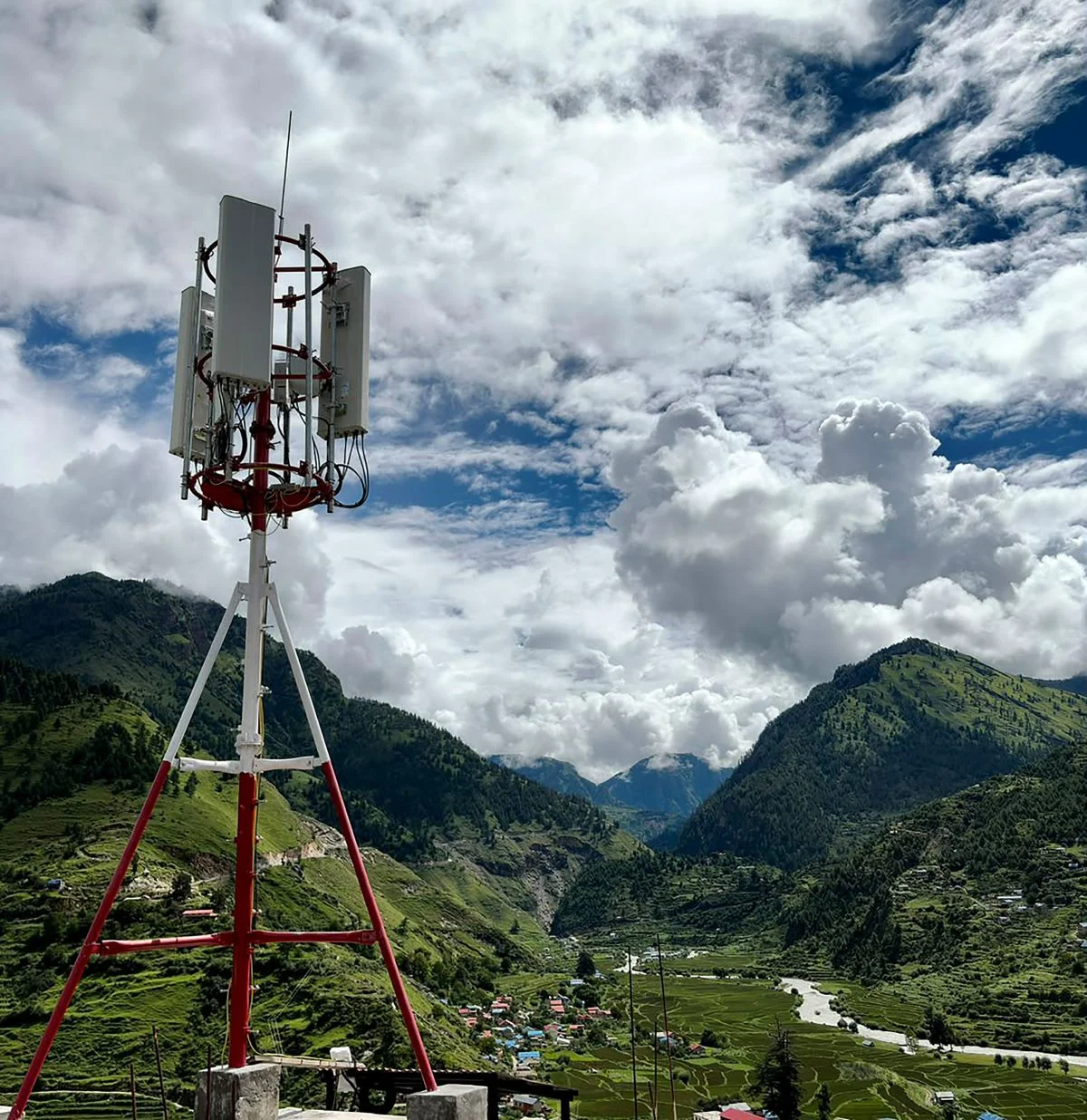
Nepal Telecom has launched 4G service in Sinja, Jumla district, after installing a new mobile tower in the Guthijyula bazaar area of Kankasundari Rural Municipality.
The new tower extends coverage across wards 3, 4, 5, 6 and 8 of Kankasundari and is powered by a solar battery system, according to Paras Pujara, chief of Nepal Telecom’s Jumla office.
The deployment forms part of a wider government-backed effort to expand mobile connectivity into remote, mountainous and tourism-focused areas.
New tower brings 4G to Kankasundari wards
The newly activated site is intended to improve mobile broadband access across several wards in Kankasundari Rural Municipality.
Sinja is historically significant as the place of origin of the Nepali, or Khas, language, and the new 4G service adds modern connectivity to an area that has previously faced the challenges associated with remote terrain.
The use of solar power also reflects the practical requirements of deploying telecom infrastructure in locations where reliable grid electricity may be limited.
Further high-altitude rollouts are planned
Nepal Telecom said 4G service is scheduled to be launched in the Badimalika temple area of Bajura district within the week.
The operator is also studying the feasibility of expanding 4G connectivity to the base camp of Mount Everest.
This would extend an existing pattern of high-altitude mobile deployments across Nepal.
4G services are already available in areas including Lhan in Tripura Sundari Municipality-6 and Dunai in Thulibheri Municipality-1 of Dolpa, both located at elevations above 3,900 metres.
Olanchungola in Taplejung, at around 3,400 metres, also has 4G coverage.
Government prioritises remote and tourism connectivity
Nepal has made expansion of telecom services in remote and tourist areas a policy priority.
In mountainous regions, mobile broadband can play a critical role in communications, emergency response, tourism services, digital access and local economic activity.
Extending coverage into difficult terrain is particularly important in Nepal, where geography can make conventional infrastructure deployment slow and expensive.
1,600 new towers planned
Nepal Telecom has initiated the process of installing 1,600 new mobile towers and developing associated sites as part of a broader effort to improve both access and service quality.
The operator is also preparing to invest around Rs6 billion to expand and improve telecom services in rural areas.
That programme could significantly widen the reach of mobile broadband if deployment targets are met.
Why this matters
The Sinja rollout is part of a larger shift in Nepal’s telecom strategy toward closing rural and high-altitude coverage gaps.
For remote communities, 4G access can support far more than consumer internet use. It can improve access to education, tourism services, digital payments, government platforms and emergency communications.
The planned tower expansion also suggests Nepal Telecom is moving from isolated rural deployments toward a more systematic network densification programme.
Editor’s note
The most important element is the scale of the wider rollout.
A single 4G tower in Sinja is significant locally, but the planned addition of 1,600 sites and Rs6 billion in rural investment could have a much broader impact on Nepal’s digital inclusion goals.
The next test will be execution in difficult terrain, especially in high-altitude areas where power, backhaul and maintenance can be as challenging as tower construction itself.