






Dubai Police has signed a Memorandum of Understanding with Milanion Technologies Vehicle Manufacturing Company to expand cooperation in training, research, innovation and other areas supporting security capabilities and institutional development.
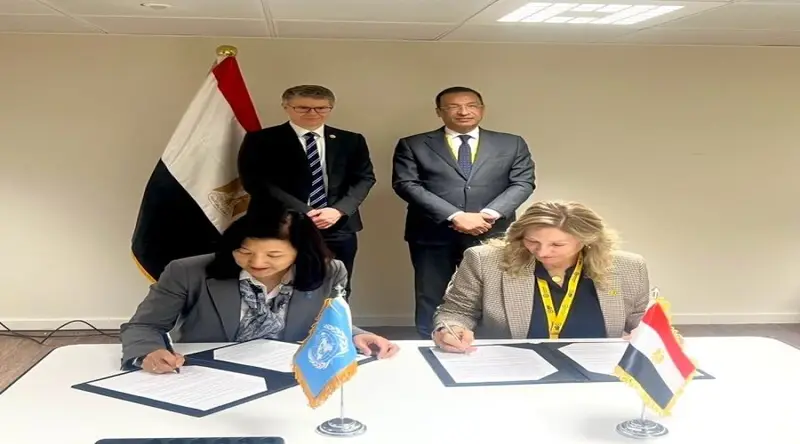
The agreement was signed by Brigadier Dr Hassan Suhail Al Suwaidi, Director of the Ports Police Station, and Mitesh Purohit, Vice President of Sales at Milanion Technologies.
The signing was also attended by Brigadier Ahmed Al Odaidy, Deputy Director of the Ports Police Station, alongside officials from both organisations.
Agreement covers training, research and innovation
Under the MoU, Dubai Police and Milanion Technologies will cooperate across several areas of mutual interest.
These include training, staff development, innovative projects, scientific research and laboratory activities.
The two sides also plan to develop joint initiatives in accordance with their respective internal systems and procedures.
The agreement creates a framework for cooperation but does not specify individual projects, technologies, implementation timelines or investment commitments.
Dubai Police expands private-sector partnerships
Brigadier Dr Hassan Suhail said the agreement forms part of Dubai Police’s wider strategy of building partnerships with government and private-sector organisations.
The objective is to strengthen security capabilities while ensuring that policing practices and technologies continue to evolve in line with wider technological and operational developments.
The MoU also reflects Dubai Police’s emphasis on collaboration as part of a broader approach to public safety.
Milanion to contribute technical expertise
Milanion Technologies said the partnership will support the exchange of expertise and knowledge while enabling the two organisations to work together on future activities.
The company is expected to contribute technical and industry experience to joint programmes developed under the framework.
Mitesh Purohit described the agreement as a strategic step toward deeper cooperation between the two sides.
Focus extends beyond equipment procurement
The scope of the MoU is broader than a simple vehicle or equipment supply arrangement.
Its inclusion of research, laboratories, training and innovation suggests a framework that could support future testing, technical evaluation and capability development.
However, the agreement remains exploratory at this stage, with no specific deployments or procurement programmes announced.
Why this matters
Security organisations across the Gulf are increasingly working with private technology companies not only as suppliers, but also as partners in research, testing and capability development.
For Dubai Police, this type of agreement can provide access to specialised technical expertise while supporting experimentation with new tools and operational models.
The inclusion of laboratories and scientific research is particularly notable because it creates the potential for cooperation around testing and validating technologies before wider operational use.
Editor’s note
The strategic value of this MoU will depend on what follows the framework agreement.
Training and knowledge exchange can create long-term institutional value, but the more important indicators will be whether the partnership produces specific pilot projects, research programmes, tested technologies or operational deployments.
Until those details emerge, the agreement should be viewed as a platform for future cooperation rather than evidence of a new technology rollout within Dubai Police.